Remote-Control Nanoparticles Deliver Drugs to Tumors
By Biotechdaily staff writers
Posted on 06 Dec 2007
Innovative nanoparticles that can be triggered to release drugs directly attacking tumors could lead to an improved diagnosis and a more targeted treatment of cancer. Posted on 06 Dec 2007
Researchers at the Massachusetts Institute of Technology (MIT, Cambridge, MA, USA) developed a system that consists of tiny particles that are superparamagnetic, a property that causes them to give off heat when they are exposed to a magnetic field. Tethered to these particles are active molecules, such as therapeutic drugs. Exposing the particles to a low-frequency electromagnetic field causes the particles to radiate heat that, in turn, melts the tethers and releases the drugs. The tethers in the system consist of two strands of DNA linked together through hydrogen bonds. In the presence of the magnetic field, heat generated by the nanoparticles breaks these bonds, leaving one strand attached to the particle and allowing the other to float away with its cargo.
To test the particles, the researchers implanted mice with a tumor- like gel saturated with nanoparticles. They placed the implanted mouse into the well of a cup-shaped electrical coil and activated the magnetic pulse. The results confirmed that without the pulse, the tethers remain unbroken. With the pulse, the tethers break and release the drugs into the surrounding tissue. The waves in this magnetic field have frequencies between 350 and 400 kilohertz—similar to radio waves. These waves pass harmlessly through the body and heat only the nanoparticles. The study was reported in the November 15, 2007, online issue of Advanced Materials.
Our overall goal is to create multifunctional nanoparticles that home to a tumor, accumulate, and provide customizable remotely activated drug delivery right at the site of the disease, said lead author Sangeeta Bhatia, M.D.,Ph.D., an associate professor in the Harvard-MIT Division of Health Sciences & Technology (HST).
Related Links:
Massachusetts Institute of Technology




Platinum Member

Automated Coagulation Analyzer
Hemolumi H6
Gold Member

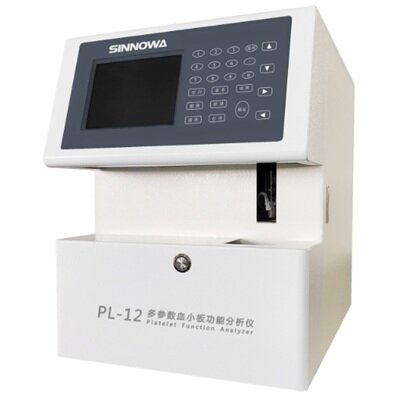
Platelet Function Analyzer
PL-12
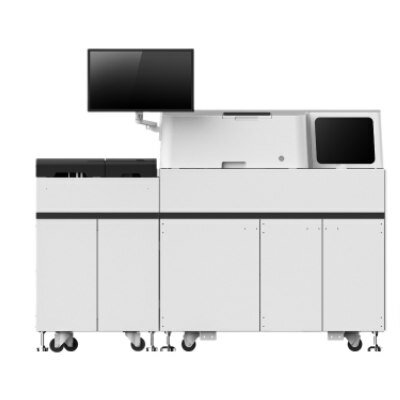

Automatic CLIA Analyzer
Shine i6000
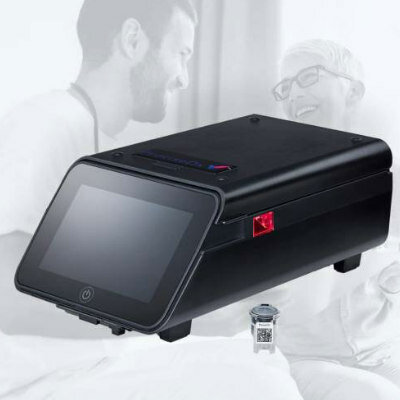

POC Immunoassay Analyzer
Procise DX