Assay Rapidly Predicts T-Cell Antigens in Protein Sequences
By Biotechdaily staff writers
Posted on 20 Nov 2007
Posted on 20 Nov 2007
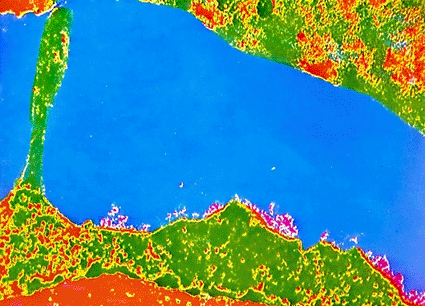
False-color transmission electron micrograph (TEM) of a human white blood cell, showing presence of an HLA antigen, which appears as uneven red areas on the exterior surface of the cell (Photo courtesy of CNRI / SPL).
The HLA is the human major MHC. This group of genes resides on chromosome 6, and encodes cell-surface antigen-presenting proteins and many other genes. Class II antigens (DR, DP, and DQ) present phagocytosed antigens from the outside of the cell to T-lymphocytes. They are involved in disease defense, cancer, autoimmunity, and organ transplant rejection. Diversity of HLA in the human population is one aspect of disease defense, and as a result, the chance of two unrelated individuals having identical HLA molecules on all loci is very low.
The new Class II Reveal binding assay for HLA alleles DR1-4 is a powerful cell-free in vitro assay that can rapidly predict T-cell antigens in any protein sequence. It is ideally suited to therapeutic programs with time pressures, such as the development of vaccines for emerging diseases, therapeutic vaccination, and immune therapies. The assay offers a significant timesaving advantage, and reduces the overall cost and risk of discovery projects.
The launch of Class II Reveal by ProImmune (Oxford, UK) followed the company's recent extension of its range of MHC Class II Ultimer-staining reagents with alleles DR2 and DR3 to cover HLA DR1 to 4. Class II Ultimers can be used to conclusively validate antigens discovered with Reveal, and in further monitoring and phenotyping of targeted immune responses, for example, in clinical trials.
Commenting on the launch, Dr. Nikolai Schwabe, CEO of ProImmune, said, "Class II Reveal helps to overcome a significant barrier in understanding key helper T-cell immune responses in detail, and to harness such responses in the design of highly targeted therapies across a very wide range of diseases. The launch of Class II Reveal underlines our strategy to provide high quality products and services that are flexible to meet customer needs and improve understanding of the immune system.”
Related Links:
ProImmune




Platinum Member

Automated Coagulation Analyzer
Hemolumi H6
Gold Member

Automatic Hematology Analyzer
CF9600
New

Fully Automated Urinalysis System
DxU 1800 Fully Automated Urinalysis System
New

Drug Testing Assays
Atellica DT 250 Analyzer