‘Re-Educating' Immune System Cells Slows Tumor Growth
By Biotechdaily staff writers
Posted on 24 Oct 2007
Immune system cells recruited by tumors to help them grow and spread could be ‘re-educated' to attack the tumors instead of aiding them, according to cancer researchers.Posted on 24 Oct 2007
Interrupting a specific chemical pathway in macrophages--the immune system cells ‘hijacked' by the tumor--was found to turn them back into cancer killers, capable of attacking the tumor directly and encouraging the rest of the immune system to do the same. The treatment also significantly reduced the rate of tumor growth in mice with ovarian cancer--a critical step in the development of a treatment for human cancer patients.
The findings of the research were presented at the National Cancer Research Institute (NCRI) Conference in Birmingham, UK, in October 2007, by Dr. Thorsten Hagemann and Prof. Frances Balkwill from the Institute of Cancer, Barts, and the London, Queen Mary's School of Medicine and Dentistry (UK).
Lead researcher Dr. Hagemann said, "Macrophages that are supposed to fight infections typically end up helping cancers by releasing chemical messages that promote tumor growth. In fact, 50% or more of a typical cancer will be made up of ‘normal' body cells, hi-jacked by the cancer to aid its survival and growth. But re-educating the macrophages turned them into effective cancer killers. It also encouraged the rest of the immune system to start acting against the tumor.”
Macrophages are known to release chemical messages that activate the protein NF-êB in cells, stopping cell death and promoting cell growth and metastasis. However, the researchers found that by modifying the chemical signaling pathways in macrophages, they could inhibit the function of NF-êB, stopping it from promoting tumor growth.
When these modified macrophages were exposed to ovarian cancer cells, the macrophages produced nitric oxide, a toxin, which resulted in the cancer cells committing suicide. The modification also resulted in the macrophages signaling other immune system cells to begin attacking the cancer. It caused an anti-tumor effect in the immune system as a whole. When the modified macrophages were injected into mice with established ovarian cancer, tumor growth was found to be significantly reduced, suggesting that the technique could one day be used to treat cancer in humans.
Dr. Lilian Clark, The UK National Cancer Research Institute's (London) executive director of science operations and funding, said, "Getting the immune system to attack the tumor itself is a hugely promising approach in the development of new cancer treatments. Such therapies could be used to strengthen existing courses of treatment, working along side chemotherapy, radiotherapy and surgery, or as targeted alternatives to these more conventional treatments without the unpleasant side-effects.”
Related Links:
Institute of Cancer, Barts, and the London, Queen Mary's School of Medicine and Dentistry




Platinum Member

Automated Coagulation Analyzer
Hemolumi H6

Gold Member

Fully-auto Specific Protein (Nephelometry) Analyzer
PA240
Gold Member
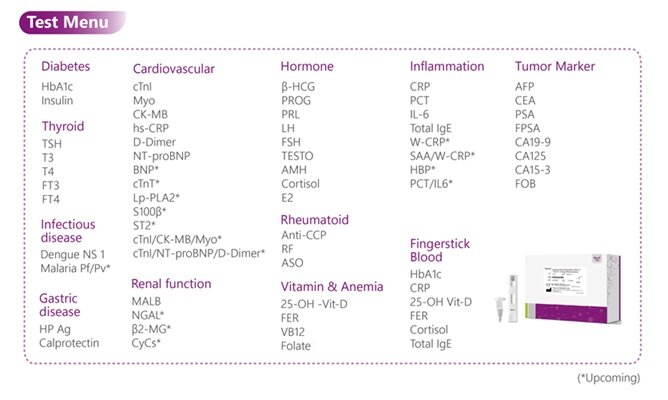
Quantitative lmmunoassay Test Menu

New
Gold Member

Serum Indices Control
Acusera Serum Indices Control