Micro-device and Nanoengineered Materials Developed To Treat Cancer and HIV
By Biotechdaily staff writers
Posted on 01 Oct 2007
Using nanotechnology, engineers have developed a small but powerful device capable of enhancing the delivery of drugs to treat life-threatening disorders.Posted on 01 Oct 2007
Called an advanced drug delivery system, the innovative device has many capabilities for destroying tumors, kidney stones, and ulcers, and treating cancer and HIV. Nanotechnology works with microscopic particles that are about one-millionth the size of a strand of hair. At about 16 cm3--a volume comparable to that of four kernels of popcorn--the device now in the evaluation phase, is far smaller than similar delivery systems that have been designed by other researchers.
The development effort was led by Dr. Shubhra Gangopadhyay, an electrical and computer engineering professor in the College of Engineering and head of the International Center for Nano/Micro Systems and Nanotechnology at the University of Missouri-Columbia (MO, USA). Similar to other nano/micro-scale devices developed by Dr. Gangopadhyay, this one also operates on a "dual-use” platform, which powers alternative energy and munitions systems for the U.S. military.
By integrating microchip-based technology with nanotechnology, Dr. Gangopadhyay fused both technologies to create a reaction resulting in supersonic shockwaves. For medical purposes, those shockwaves, along with nanoparticles, propagate into the body to make infected cells permeable for drug interaction. The device allows for a non-invasive procedure that utilizes the body's pores as entry points.
Other usages include the dispersion of drug-carrying nanoparticles, known as a nanosponge, into the body. Such sponges can target specific cells and areas that have been affected by disease. Other applications involve the delivery of gold nanoparticles, a florescent material, into the body. By attaching to infected cells, the unique particles can allow clinicians to track drug movement and the spread of disease throughout the body.
The researchers reported that nanoparticles contain no harmful components and are not hazardous to the body. They also stressed that the device will require as many as three more years of assessment before it is made available to pharmaceutical companies. Nems/Mems Works, LLC will market the device and various nanoparticles associated with the research.
Related Links:
University of Missouri-Columbia




Platinum Member

Automated Coagulation Analyzer
Hemolumi H6
Gold Member

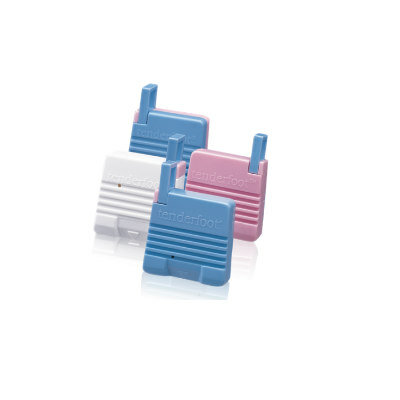
Neonatal Heel Incision Device
Tenderfoot
Gold Member

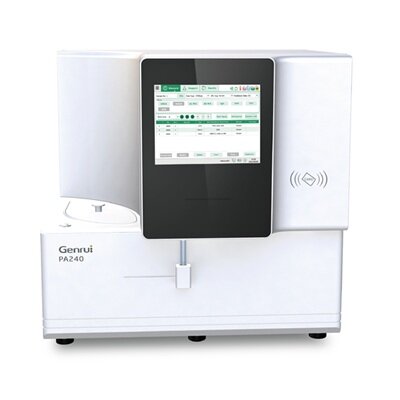
Fully-auto Specific Protein (Nephelometry) Analyzer
PA240
New

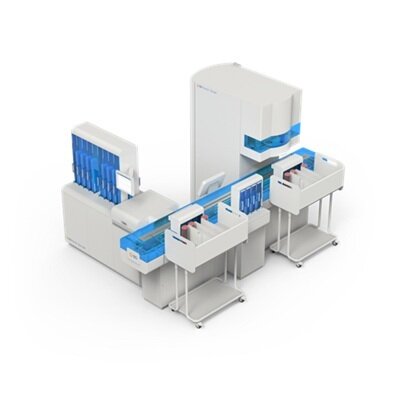
Microbiology Laboratory Automation Solution
BD Kiestra™ ReadA+BarcodA