New Drugs May Target C. difficile Toxin Producing Genes
By Biotechdaily staff writers
Posted on 18 Sep 2007
Bacteriologists have identified a protein regulator of toxin production in the gastrointestinal pathogen Clostridium difficile and suggest that it may be an attractive drug target for controlling the disease.Posted on 18 Sep 2007
Investigators at the Tufts University School of Medicine (Boston, MA, USA) focused on the protein produced by the CodY gene, a global regulator of gene expression in Gram-positive bacteria. They genetically engineered a strain of C. difficile lacking the CodY gene and compared its toxin production to the wild type strain. Results published in the August 28, 2007 online edition of Molecular Microbiology revealed that the mutant strain produced much higher levels of toxin.
To determine the mode of action of CodY protein the investigators mixed the protein with DNA extracted from C. difficile. They found that the protein bound with high affinity to a DNA fragment containing the promoter region of the tcdR gene, which encodes a sigma factor permitting RNA polymerase to recognize promoters of the two major toxin genes as well as its own promoter. CodY also bound, but with low affinity, to the toxin gene promoters, suggesting that the regulation of toxin gene expression by CodY occurred primarily through direct control of tcdR gene expression. Binding of CodY to the tcdR promoter region was enhanced in the presence of GTP (guanosine triphosphate) and branched-chain amino acids, suggesting a link between nutrient limitation and the expression of C. difficile toxin genes.
"The C. difficile bacteria only produce toxins when they are in need of food,” explained senior author Dr. Abraham Sonenshein, professor of microbiology at the Tufts University School of Medicine. "We found that the CodY protein, in essence, monitors the hunger level of C. difficile, preventing toxin production when the bacteria have enough to eat.”
"When CodY senses that the cell has enough nutrients, it binds to this gene region, and prevents the bacterium from making toxin,” said Dr. Sonenshein. "Conversely, when food is scarce, the CodY protein does not bind to these genes, allowing C. difficile to make the toxins needed to attack intestinal cells. It is possible that, based on our findings, a new drug could be developed that would trick CodY into thinking there is enough fuel for the bacteria, causing CodY to remain bound to the toxin gene region and thus suppressing toxin production.”
Related Links:
Tufts University School of Medicine




Platinum Member

Automated Coagulation Analyzer
Hemolumi H6
Gold Member

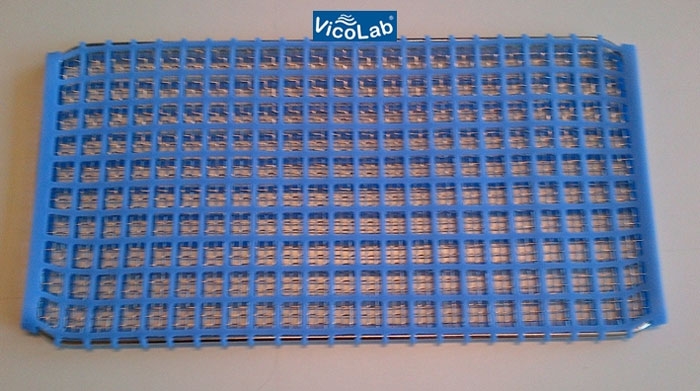
NEW PRODUCT : SILICONE WASHING MACHINE TRAY COVER WITH VICOLAB SILICONE NET VICOLAB®
REGISTRED 682.9

Manual Pipetting Aid
Pipette Controllers macro

New

Slide Scanner System
NanoZoomer S540MD