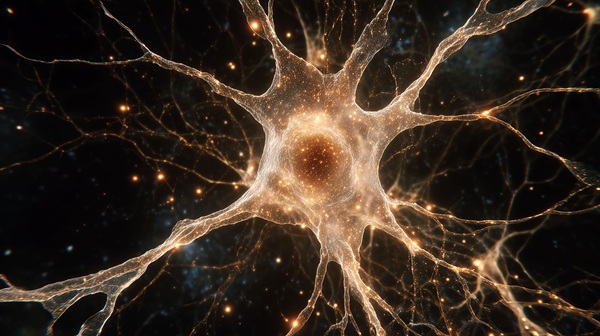
Brain Implants Lessen Alzheimer's Damage
By Biotechdaily staff writers
Posted on 12 Sep 2007
Genetically modified cells implanted in laboratory mice dissolved plaques linked with Alzheimer's disease (AD). Posted on 12 Sep 2007
Laboratory mice implanted with a human gene developed AD at an accelerated rate; but after receiving the genetically modified cells, the brain-fogging plaques dissolved. If this process works in humans, old age could be a much happier time of life.
AD involves a protein called amyloid-beta, which generates the sticky clumps or plaques that form in the brain. These toxic clusters, along with accessory tangled fibers, destroy brain cells and interfere with memory and thinking processes. The disorder has been compared to an accumulation of cholesterol in coronary arteries.
"Delivery of genes that led to production of an enzyme that breaks up amyloid showed robust clearance of plaques in the brains of the mice,” noted Dr. Dennis Selkoe, professor of neurologic diseases at Harvard Medical School (Cambridge, MA, USA). "These results support and encourage further investigation of gene therapy for treatment of this common and devastating disease in humans.”
The initial report of the project conducted by Dr. Selkoe and other researchers from Harvard-affiliated Brigham and Women's and McLean hospitals (Boston, MA, USA) was published August 27, 2007 on the website of the [U.S.] Public Library of Science.
The gene delivery technique utilized by the researchers has been used in several other trials with animals that model human disease, including cancers. The procedure involves removing cells from patients, making genetic alterations, and then putting back the modified cells, which should treat the disease or disability. So far, this approach has produced encouraging results for cancers, blood, muscle, diseases of the eye, spinal cord injuries, stroke, Parkinson's disease, Huntington's disease, and amyotrophic lateral sclerosis (Lou Gehrig's disease). "Several of these potential treatments have advanced to human trials, with encouraging outcomes for patients,” stated Dr. Matthew Hemming, lead author of the report and a graduate student in Dr. Selkoe's lab.
Another way to apply gene therapy involves using a virus to carry the curative gene to target cells. However, two people have died and three contracted leukemia in experiments using this method. The disadvantage to using viruses this way is that the added gene frequently mixes with the patient's genome in ways that can lead to unwanted side effects, including cancer, and potentially, death.
The Harvard team used skin cells from the animal's own body to introduce a gene for an amyloid-dissolving enzyme known as neprilysin. The skin cells, also known as fibroblasts, "do not form tumors or move from the implantation site,” Dr. Hemming noted. "They cause no detectable adverse side effects and can easily be taken from a patient's skin.” Furthermore, other genes can be added to the fibroblast-neprilysin combination, which will eliminate the implants if something begins to go wrong.
This technique worked well in the Alzheimer's experiments. "The gene that removed the amyloid-beta may not only prevent brain cells from dying, but will also remove the toxic protein that drives the disease progression,” Dr. Hemming commented. The study confirmed that the technique works, but whether it will work in humans remains to be seen. One major hurdle, Dr. Selkoe reported, is the larger size of a human brain compared to that of a mouse. That difference will require an increase of amyloid-busting activity throughout a much larger space.
One solution might involve implanting the genes and fibroblasts where they have the best access to amyloid-beta, in the spinal fluid for example, instead of trying to inject them into a small target. The amyloid-killing combination could also be put into capsules that would secrete neprilysin into the blood circulating in the brain, eliminating the need to target an exact spot.
This or some other sophisticated application that does not require surgery might eliminate the sticky plaques, but will that improve an individual's memory? Moreover, will the change be long lasting? "Further work is needed to determine if reducing the plaque burden has cognitive benefits over a long period,” noted Dr. Hemming, "but there's a wealth of evidence arguing that it will.”
Related Links:
Harvard Medical School




Platinum Member

Automated Coagulation Analyzer
Hemolumi H6

New
Gold Member

Serum Indices Control
Acusera Serum Indices Control

New
Silver Member

Connectivity Solution
EKF Link

Automatic CLIA Analyzer
Shine i6000