Mitochondrial Proteins Implicated in Neurodegenerative Disorders
By Biotechdaily staff writers
Posted on 05 Sep 2007
Posted on 05 Sep 2007
Image
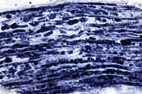
When a nerve axon is cut or crushed, the nerve fibers in the distal part of the axon, separated from the cell body, undergo a form of spontaneous degeneration, known as Wallerian degeneration. Furthermore, neurons are primary pathologic targets in many neurodegenerative conditions, ranging from Alzheimer disease to motor neuron disease. Axons and synapses are protected from degeneration by the slow Wallerian degeneration (Wlds) gene.
Investigators at the University of Edinburgh (UK) used differential proteomics analysis to identify proteins whose expression levels were significantly altered in isolated synaptic preparations from the striatum of Wlds mice. Results published in the August 2007 issue of the journal Molecular & Cellular Proteomics revealed that eight of the 16 proteins that modified expression levels in Wlds synapses were known regulators of mitochondrial stability and degeneration. Of the non-mitochondrial proteins identified, several had been implicated in neurodegenerative diseases where synapses and axons were primary pathologic targets.
The investigators concluded that, "Altered mitochondrial responses to degenerative stimuli are likely to play an important role in the neuroprotective Wlds phenotype and that targeting proteins identified in the current study may lead to novel therapies for the treatment of neurodegenerative diseases in humans.”
Related Links:
University of Edinburgh




Platinum Member

Automated Coagulation Analyzer
Hemolumi H6

Gold Member

Flocked Fiber Swabs
Puritan® Patented HydraFlock®


Automated Urinalysis Solution
UN-9000

New

Automated Immunoassay Analyzer
SuperFlex™