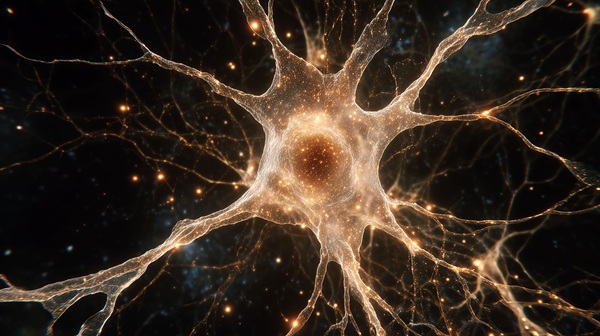
Milestone Achieved in the Regeneration of Brain Cells
By Biotechdaily staff writers
Posted on 04 Sep 2007
A research group has achieved an additional step for the potential replacement of damaged brain cells after injury or disease: functional nerve cells can be generated from astroglia, a type of supportive cells in the brain by means of dedicated regulator proteins.Posted on 04 Sep 2007
The majority of cells in the human brain are not nerve cells but star-shaped glia cells, the so-called astroglia, according to the researchers, from the Institute of Stem Cell Research of the GSF-National Research Center for Environment and Health (Neuherberg, Germany), and the Ludwig Maximilians University (Munich, Germany). "Glia means glue,” explained Prof. Dr. Magdalena Götz, from GSF-National Research Center for Environment and Health. "As befits their name, until now these cells have been regarded merely as a kind of ‘putty' keeping the nerve cells together.”
A couple of years ago, the researchers were able to confirm that these glia cells function as stem cells during development. This means that they are able to differentiate into functional nerve cells. However, this ability gets lost in later stages of development, so that even after an injury to the adult brain, glial cells are unable to generate any more nerve cells.
To be able to reverse this development, the team evaluated what molecular switches are needed for the creation of nerve cells from glial cells during development. These regulator proteins are introduced into glial cells from the postnatal brain, which then respond by triggering the expression of neuronal proteins.
In his current study, Dr. Benedikt Berninger, from the Ludwig Maximilians University, was able to demonstrate that single regulator proteins were quite sufficient to generate new functional nerve cells from glia cells. The transition from glia-to-neuron could be tracked live with a time-lapse microscope. It was shown that glia cells needed time for the reprogramming until they take the normal shape of a nerve cell. "These new nerve cells then have also the typical electrical properties of normal nerve cells,” emphasized Dr. Berninger. "We could show this by means of electrical recordings.”
"Our results are very encouraging, because the generation of correctly functional nerve cells from postnatal glia cells is an important step on the way to be able to replace functional nerve cells also after injuries in the brain,” stressed Dr. Götz.
The researchers published their findings in the August 8, 2007, issue of the Journal of Neuroscience.
Related Links:
Institute of Stem Cell Research of the GSF-National Research Center for Environment and Health
Ludwig Maximilians University




Platinum Member

Automated Coagulation Analyzer
Hemolumi H6
Gold Member

Aspiration System
VACUSAFE
New

MR-proADM Test
B•R•A•H•M•S MR-proADM KRYPTOR test
Gold Member

Blood-Based Protein Biomarker Solution for Alzheimer's Disease
BG-DTi2000.