Labeling Kit Enables Microarray Analysis of Preserved Tumor DNA
By Biotechdaily staff writers
Posted on 23 Aug 2007
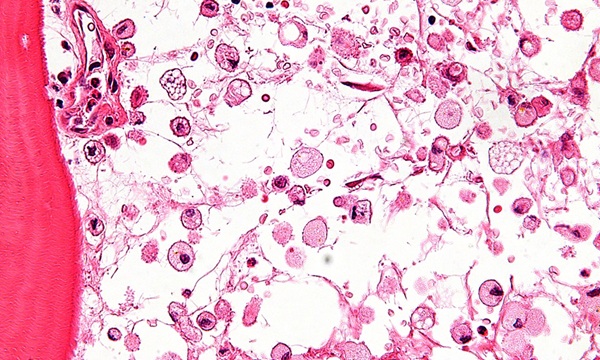
Labeling kits enable oligo microarray comparative genomic hybridization (CGH) analysis of DNA from formalin-fixed paraffin-embedded (FFPE) tissue samples. The method can be used for DNA from preserved tumor samples previously considered too damaged to examine.Posted on 23 Aug 2007
The method is based on Kreatech's (Amsterdam, The Netherlands) universal linkage system (ULS) technology, a non-enzymatic direct labeling methodology that was optimized for Agilent (Santa Clara, CA, USA) oligo CGH microarrays. The method of enzymatic labeling can introduce bias while further reducing DNA fragment size. The new labeling technology features a simple, single-tube protocol, enabling a reduced cost per experiment.
There are an estimated 400 million FFPE-preserved samples in tissue banks worldwide, and the DNA in these samples has been considered too degraded to use in microarray analysis techniques such as aCGH, which is a powerful method for studying DNA copy number variation in cancers and genetic disorders. For example, the department of pathology and laboratory medicine at the University of Pennsylvania (Philadelphia, USA) has approximately 600,000 paraffin-embedded tissue samples that date back to the 1940s. The new labeling capability would allow more comprehensive retrospective analysis from sample biobanks and clinical repositories at a large number of cancer centers.
"Our comparison data showed that the new Agilent non-enzymatic labeling kit is superior to standard Klenow-based DNA labeling protocol,” said Lynda Chin, M.D., from the Dana-Farber Cancer Institute (Boston, MA, USA). "The improved signal achieved with this non-enzymatic labeling technique was more apparent when working with modestly degraded genomic DNA extracted from formalin-fixed paraffin-embedded samples.”
Related Links:
Kreatech
Agilent
Dana-Farber Cancer Institute




Platinum Member

Automated Coagulation Analyzer
Hemolumi H6
Gold Member

Blood-Based Protein Biomarker Solution for Alzheimer's Disease
BG-DTi2000.
New

Nucleic Acid Purification Instrument
QIAsymphony Connect

LAIR2 Antibody Pair Set
LAIR2 Antibody Pair [Biotin]