Intestinal Bacteria Trigger Antibody Class Switching
By Biotechdaily staff writers
Posted on 02 Jul 2007
Posted on 02 Jul 2007
Image
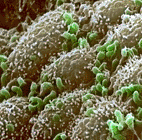
Investigators at Weill Cornell Medical College (New York, NY, USA) studied the mechanism that signaled B cells in the intestinal mucosa to switch to production of IgA2 antibodies. This is an important control mechanism, as IgA2 is more resistant to bacterial proteases than is IgA1. The number of bacteria present is linked to the amount of IgA2.
Their report, published in the June 2007 issue of the journal Immunity, explained that high levels of bacteria in the gut stimulated intestinal epithelial cells to start producing a factor called APRIL (a proliferation-inducing ligand). APRIL, a cytokine-signaling chemical, induced the production of IgA2 in nearby B-cells. The epithelial cells further increased APRIL production by activating dendritic cells via thymic stromal lymphopoietin.
"That is a wholly new finding, since most biologists think of epithelial cells as a barrier cell--not as a highly active player in immune function,” said senior author Dr. Andrea Cerutti, associate professor of patholog4y and laboratory medicine at Weill Cornell Medical College. "Armed with this knowledge, perhaps we can harness the mechanisms we have discovered to ward off more dangerous pathogens that use mucosal surfaces as their point of entry into the body -viruses such as HIV, or Rotavirus, the diarrhea pathogen that kills millions of children in poor countries each year. A better understanding of how the body fights off mucosal pathogens helps us immensely when we try and develop vaccines that target these areas.”
Related Links:
Weill Cornell Medical College




Platinum Member

Automated Coagulation Analyzer
Hemolumi H6
.jpg)
Gold Member

Clinical Chemistry Assay
Sorbitol Dehydrogenase (SDH)

LAIR2 Antibody Pair Set
LAIR2 Antibody Pair [Biotin]
Gold Member

Fully-auto Specific Protein (Nephelometry) Analyzer
PA240