Patient-Friendly Blood Test for Colon Cancer Under Development
By Biotechdaily staff writers
Posted on 25 Jun 2007
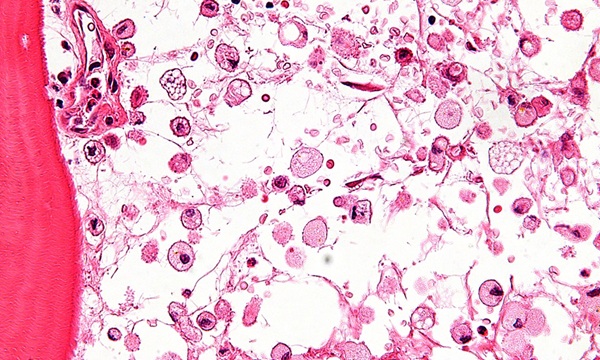
Cancer researchers used two colon cancer protein antigens as the basis for a sensitive blood test for screening individuals to detect the presence of precancerous polyps or colon cancer.Posted on 25 Jun 2007
Despite the recommendations of the medical community that individuals past middle age undergo colonoscopy examinations on a regular basis to reduce the risk of developing colon cancer, most people opt not to endure the invasive, unpleasant procedure.
Investigators at Johns Hopkins University (Baltimore, MD, USA) have designed a patient-friendly blood test that may eliminate the need for diagnostic colonoscopies for most individuals. The test is based on two colon cancer protein antigens that circulate in the blood. The two antigens, CCSA-3 and CCSA-4, are detectable by enzyme-linked immunosorbent assay (ELISA) techniques.
The investigators used the ELISA procedure to evaluate serum samples from 107 subjects undergoing colonoscopy, 28 subjects with colorectal cancer, and 125 subjects with benign disease or other types of cancer. Individuals who were tested by colonoscopy were classified into mutually exclusive categories, including normal colon, hyperplastic polyp, nonadvanced adenoma, and advanced adenoma.
Results published in the June 15, 2007, issue of the journal Cancer Research revealed that at a cutoff of 2 µg/ml for CCSA-3 and 0.3 µg/ml for CCSA-4, each marker detected all 28 colorectal cancers, for a sensitivity of 100%. The ELISA results also correctly identified 51 of 53 individuals (96.2%) with normal colons and 14 of 18 (77.8%) people with advanced precancerous polyps.
"These proteins seem very good at separating normal samples from cancerous ones and identifying other groups with pre-cancers at high risk for disease as well,” said senior author Dr. Robert Getzenberg, professor of urology at Johns Hopkins University.
Related Links:
John Hopkins University




Platinum Member

Automated Coagulation Analyzer
Hemolumi H6
Gold Member

Automatic Hematology Analyzer
CF9600
Platinum Member
Integrated Biochemical & Immunological System
Biolumi CX Solution X10+C10

CMV CLIA Diagnostic
CLIA CMV IgA Screen Group