Treatment for Alzheimer's Disease May Increase Cancer Risk
By Biotechdaily staff writers
Posted on 18 Jun 2007
Researchers have found that drugs under development to treat Alzheimer's disease by inhibiting the enzyme gamma secretase may increase cancer risk by stimulating the activity of epidermal growth factor receptor (EGFR). EGFR is upregulated in a variety of tumors, and elevated EGFR levels are linked to poor clinical prognosis and tumor resistance to chemotherapy. Posted on 18 Jun 2007
Investigators at the Burnham Institute for Medical Research (La Jolla, CA, USA) worked with a line of mice that had been genetically engineered to lack the gene for synthesis of presenilin (PS), a key component of the gamma secretase complex.
Gamma secretase is a multi-subunit integral membrane protease complex that cleaves single-pass transmembrane proteins at residues within the transmembrane domain. The gamma secretase complex has not yet been fully characterized but minimally consists of four individual proteins: presenilin, nicastrin, APH-1 (anterior pharynx-defective 1), and PEN-2 (presenilin enhancer 2). Presenilin, an aspartyl protease, is the catalytic subunit; mutations in the presenilin gene have been shown to be a major genetic risk factor for Alzheimer's disease.
The most well-known substrate of gamma secretase is the amyloid precursor protein, a large integral membrane protein that, when cleaved by both gamma and beta secretase, produces a short 39-42 amino acid peptide called amyloid beta, whose abnormally folded fibrillar form is the primary component of amyloid plaques found in the brains of Alzheimer's disease patients. Gamma secretase is also critical in the related processing of the Notch protein.
The investigators reported in the June 7, 2007, online edition of the Proceedings of the [U.S.] National Academy of Sciences that mice lacking the PS gene produced more EGFR and developed skin tumors. "Alzheimer's disease and cancer are two of the most important medical research areas today,” said senior author Dr. Huaxi Xu, associate professor of neurosciences at the Burnham Institute for Medical Research. "We believe that our studies, which reveal a key role of Alzheimer's PS/gamma-secretase-generated APP [amyloid precursor protein metabolite AICD [APP intracellular domain] in gene transcription and in EGFR-mediated tumorigenesis, should have a significant impact on both fields of research.”
Related Links:
Burnham Institute for Medical Research




Platinum Member

Automated Coagulation Analyzer
Hemolumi H6
Gold Member

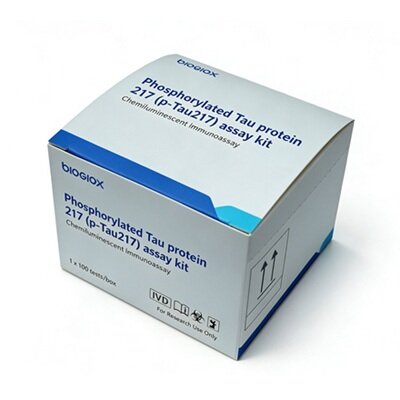
Blood-Based Protein Biomarker Solution for Alzheimer's Disease
BG-DTi2000.
New
Silver Member

Vitamin D Assay
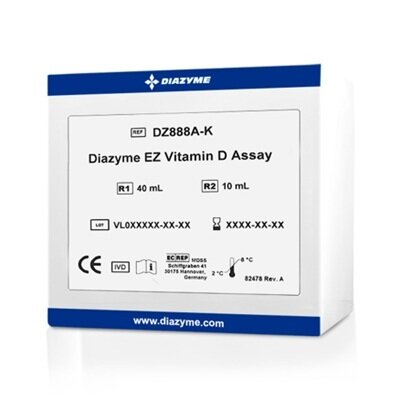
EZ Vitamin D Assay

Urine Analyzer
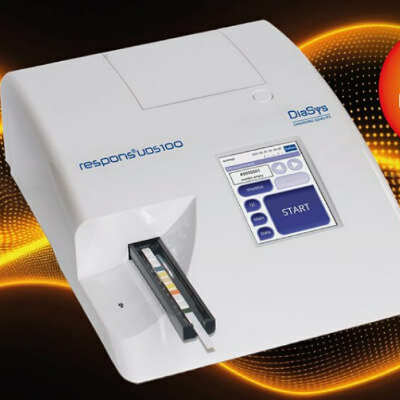
respons® UDS100