Agent Protects Cells from Radiation Effects Even if Given After Exposure
By Biotechdaily staff writers
Posted on 29 May 2007
Scientists have developed a compound that protects cells from the deadly effects of radiation, regardless of whether it is given before or after exposure.Posted on 29 May 2007
No agents yet exist to protect the public from the high levels of radiation that could be released by a "dirty” bomb or nuclear explosion. Such excessive exposure typically causes death within weeks as the radiation destroys blood cells crucial to clotting and fighting infection, along with the stem cells needed to replenish their supply.
Using this agent in mice, the investigators from Washington University School of Medicine in St. Louis (MO, USA) found that the treatment helped protect rapidly dividing cells that are most susceptible to radiation-induced death, providing proof in principle that it is possible to fend off radiation damage, according to a study published in the April 6, 2007, issue of the journal Biochemical and Biophysical Research Communications.
Current treatments for severe radiation exposure, also called acute radiation syndrome, are limited to drugs that enhance the production of blood cells and platelets, but this approach is useless if underlying stem cells are also killed off. Furthermore, there are no available treatments that can be given after exposure to limit damage to cells.
The investigators developed the agent by attaching a portion of the Bcl-xL protein already known to block cell death--a snippet called BH4--to the HIV protein TAT, which can deftly carry other molecules into cells. They gave the agent intravenously to mice exposed to 5-Gy radiation. In humans, this degree of exposure would cause a sharp decrease in blood cells, leaving individuals with an increased risk of infection and bleeding.
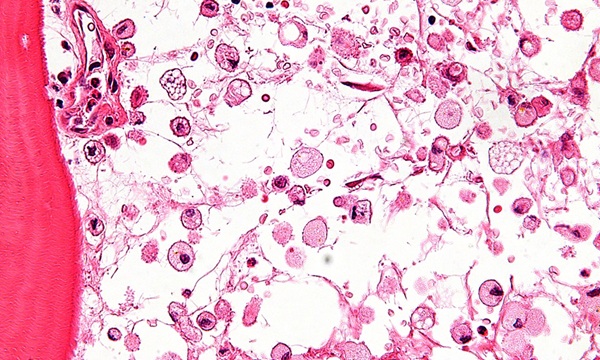
The researchers discovered that the treatment helped protect rapidly dividing T cells and B cells in the spleen--immune system cells that are prone to radiation damage--whether it was given 30 minutes before radiation exposure or 30 minutes afterward.
Follow-up data suggest that TAT-BH4 is still effective when it is given to irradiated mice one hour after exposure, and the researchers plan additional research to determine how long after exposure the agent can prevent radiation-induced apoptosis.
In the past several years, the U.S. federal government has devoted increasing resources to the development of countermeasures that protect the public from chemical, biologic, radiologic, or nuclear attack. TAT-BH4 may one day be a viable candidate because hypothetically it could be given after radiation exposure, administered in pill form, and synthesized and stored in large quantities--all characteristics that would be beneficial for treating large groups of individuals exposed to high levels of radiation, according to Dr. Hotchkiss.
Related Links:
Washington University School of Medicine in St. Louis




Platinum Member

Automated Coagulation Analyzer
Hemolumi H6
Gold Member

Fully-auto Specific Protein (Nephelometry) Analyzer
PA240

Urine Analyzer
respons® UDS100

Manual Pipetting Aid
Pipette Controllers macro