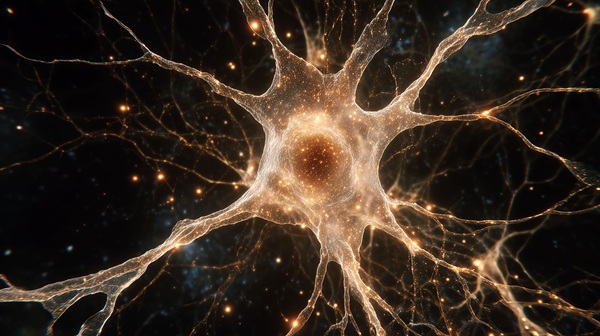
Micro-Imaging Technique Reveals Brain's Neuronal Networks
By Biotechdaily staff writers
Posted on 29 May 2007
Scientists have created a new imaging method called ultramicroscopy by combining two older techniques in order for researchers to view the entire brain at a microscopic level. Posted on 29 May 2007
There is currently no technique available that images the entire neuronal network in an intact brain. Although computed tomography (CT) and magnetic resonance imaging (MRI) are utilized for this purpose, they do not have a cellular level resolution to reveal the micro details. Brain sectioning for microscopic imaging is a better alternative, obtaining three-dimensional (3D) images for all the multiple slices, but it is a laborious task and is highly prone for distortions.
Dr. Hans-Ulrich Dodt and colleagues, formerly at the Max Planck Institute of Psychiatry (Munich, Germany) and now at the Vienna University of Technology (Austria), reportedm that their goal was to have a method that will ultimately image all nerve cells with all their connections in the whole mouse brain. The method was published in the April 2007 issue of the journal Nature Methods.
The principle behind the method is that the brain is made translucent by putting in special oil medium, similar to a drop of oil on a paper, which makes it translucent. The organ is then illuminated only in one plane from the side with a laser. The next step involves gathering all the optical sections by a computer and finally obtaining a three-dimensional (3D) reconstruction. The technique's unique benefit is that it can be used to image large macroscopic specimens with microscopic resolution, which was not possible before.
According to Dr. Dodt, ultramicroscopy has even a wider range of applications than confocal microscopy, and therefore, the impact will be enormous. One possible application of the technique is investigation of Alzheimer's disease (AD) brains of mice. Up to now, the industry used a very labor-intensive standard--the histology to test a new Alzheimer drug on AD-modified mice. With ultramicroscopy, it should be possible to accomplish the same in one hour. Thus, it should have a big impact, as there are also other neurologic diseases and their treatment that can be investigated in 3D.
The researchers are planning to obtain brain scans of both mouse embryos and adult mice. They hope to gain better knowledge about how mammalian brain networks change during development and learning. This could not only give key insights about how mammalian brains evolve over time but also about how information networks are affected or altered in disease states.
Related Links:
Vienna University of Technology




Platinum Member

Automated Coagulation Analyzer
Hemolumi H6

Gold Member

Flocked Fiber Swabs
Puritan® Patented HydraFlock®


Urine Analyzer
respons® UDS100

New

Slide Scanner System
NanoZoomer S540MD