Telomere Shortening Linked to Fatal Lung Disease
By Biotechdaily staff writers
Posted on 07 May 2007
A recent report described the link between mutations in genes coding for telomere regulating enzymes and the likelihood for developing the fatal lung disease idiopathic pulmonary fibrosis (IPF).Posted on 07 May 2007
IPF is an adult-onset, lethal, scarring lung disease of unknown etiology. Approximately 50,000 new cases of the disease are reported each year in the United States. The disease typically strikes people over 50 years of age, causing severe scarring of the lungs, with death usually occurring about three years after diagnosis. About 2% of patients have an inherited form of the disease.
Investigators at the University of Texas Southwestern Medical Center (Dallas, USA) utilized the genetic connection to search for any mutations that might be linked to the disease. They prepared gene linkage maps for members of 46 families with two or more cases of lung scarring and focused on two of the largest families. Mutations were found on chromosome 5 that were traced to two genes, TERT (encodes telomerase reverse transcriptase) and TERC (the RNA component of telomerase).
Sequencing the DNA of 44 additional unrelated families and 44 sporadic cases of interstitial lung disease revealed five other mutations in TERT. A heterozygous mutation in TERC also was found in one family. Heterozygous carriers of all of the mutations in TERT or TERC had shorter telomeres than age-matched family members without the mutations. The investigators summarized their study in the April 24, 2007, online edition of the Proceedings of the [U.S.] National Academy of Sciences with the observation that mutations in TERT or TERC that resulted in telomere shortening over time conferred a dramatic increase in susceptibility to adult-onset IPF.
Related Links:
University of Texas Southwestern Medical Center




Platinum Member

Automated Coagulation Analyzer
Hemolumi H6
Gold Member

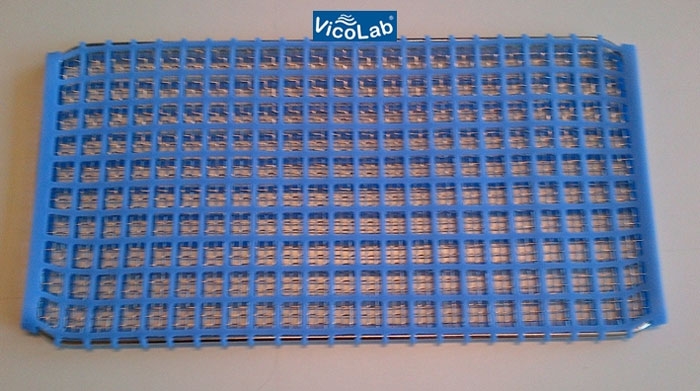
NEW PRODUCT : SILICONE WASHING MACHINE TRAY COVER WITH VICOLAB SILICONE NET VICOLAB®
REGISTRED 682.9

CMV CLIA Diagnostic
CLIA CMV IgA Screen Group
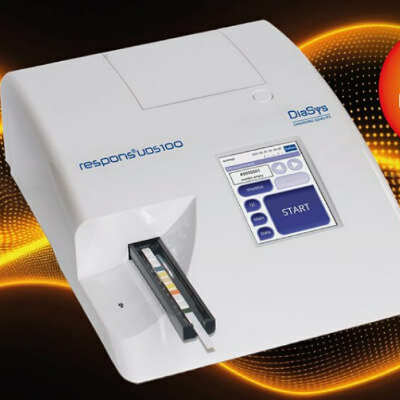

Urine Analyzer
respons® UDS100