Noninvasive Diagnostic Test Indicates Preterm Birth Risk
By Biotechdaily staff writers
Posted on 24 Apr 2007
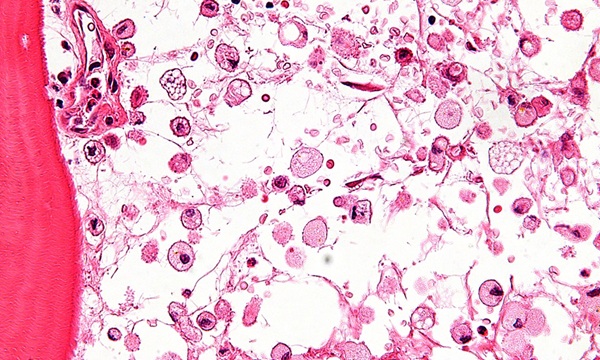
Cervical-vaginal fluid (CVF) is a potential rich source of biomarkers for enhancing our understanding of human parturition and pathologic conditions affecting pregnancy.Posted on 24 Apr 2007
Scientists have performed a comprehensive survey of the CVF proteome in pregnancy utilizing multidimensional liquid chromatography (2D-LC) coupled with mass spectrometry and gel-electrophoresis-based protein separation and identification.
In total, 150 unique proteins were identified using multiple protein identification algorithms. Metabolism (32%) and immune response-related (22%) proteins are the major functional categories represented in the CVF proteome. A comparison of the CVF, serum, and amniotic fluid proteomes showed that 77 proteins are unique to CVF, while 56 and 17 CVF proteins also occur in serum and amniotic fluid, respectively. This data set provides a foundation for evaluation of these proteins as potential CVF biomarkers for noninvasive diagnosis of pregnancy-related disorders.
With pre-term births a major international health problem, scientists are reporting an advance toward developing a much-needed, noninvasive test for predicting when pregnant women are about to deliver early. Oregon Health Science University's (Portland, OR, USA) Dr. Srinivasa R. Nagalla and colleagues there and at the University of Washington in Seattle, WA, USA, reported the discovery of protein biomarkers that could lead to such a test. The work was published in the April 9, 2007, issue of the Journal of Proteome Research.
In the report, researchers explained that spontaneous preterm births (before 37 weeks of pregnancy) have increased steadily during the last 25 years and now account for 70-80% of neonatal deaths. Development of a rapid diagnostic test for pre-term labor would be a major advance.
The scientists analyzed cervical-vaginal fluid from 18 women, including six with spontaneous preterm birth, six with preterm labor, and six controls. They identified proteins that were present in women with preterm deliveries that could eventually serve as biomarkers for the condition. While emphasizing that the finding should be confirmed in a larger group of women, the study terms it an important step toward identifying women at high risk for preterm birth.
Related Links:
Oregon Health Science University




Platinum Member

Automated Coagulation Analyzer
Hemolumi H6

Gold Member

Flocked Fiber Swabs
Puritan® Patented HydraFlock®

Immunofluorescence Analyzer
IFA System

Automatic CLIA Analyzer
Shine i6000