






New Spectrometry Provides Nanoscale View of Biologic World
By Biotechdaily staff writers
Posted on 12 Oct 2006
The development of new multi-isotope imaging mass spectrometry (MIMS) that enables scientists to image and quantify molecules within individual mammalian or bacterial cells has applications in all fields of biology and biomedical research.Posted on 12 Oct 2006
"This method allows us to see what has never been seen before, and to measure what has never before been measured,” explained Dr. Claude Lechene, from Harvard Medical School (Boston, MA, USA), who, together with colleagues around the world, developed MIMS.
In this new mass-spectrometry method, a beam of ions is used to bombard the surface atoms of the biologic sample, and a fraction of the atoms are emitted and ionized. These "secondary ions” can then be manipulated with ion optics--in much the same way that lenses and prisms manipulate visible light--to create an atomic mass image of the sample. Dr. Lechene and colleagues developed MIMS by combining the use of a novel secondary-ion mass spectrometer developed by Georges Slodzian, of the Universite Paris-Sud (France), labeling with stable isotopes, and building quantitative image-analysis software.
"Imagine looking into a building, slice by slice. You can see not only that it contains apartments, but also that each apartment contains a refrigerator. You can see there are tomatoes in the refrigerator of one apartment, and potatoes in the refrigerator of another. You can count how many there are and measure how fast they are used and replaced. It is this level of resolution and quantification that MIMS makes possible,” noted Dr. Lechene.
MIMS can generate quantitative, three-dimensional (3D) images of proteins, DNA, RNA, sugar, and fatty acids at a subcellular level in tissue sections or cells. "Using MIMS, we can image and quantify the fate of these molecules when they go into cells, where they go, and how quickly they are replaced,” said Dr. Lechene.
The method does not need staining or the use of radioactive labeling. Instead, it can use stable isotopes to track molecules. MIMS has been used to measure the capture of atmospheric nitrogen and its conversion to dietary nitrogen within single bacteria, a phenomenon essential to supporting life on earth. MIMS may have applications in tracking stem cells and in understanding why some organ transplants are rejected.
The development of MIMS was reported in the October 5, 2006, issue of the Journal of Biology of Biomed Central (http://jbiol.com/content/5/5/20).
"The most significant feature of this technique is that it opens up a whole new world of imaging; we haven't yet imagined all that we can do with it,” observed Dr. Peter Gillespie, of the Oregon Health and Science University (Portland, OR, USA), in an accompanying article in the Journal of Biology.
Related Links:
Harvard Medical School




Platinum Member

Automated Coagulation Analyzer
Hemolumi H6
Gold Member

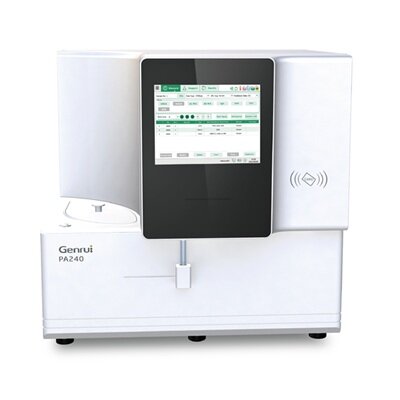
Fully-auto Specific Protein (Nephelometry) Analyzer
PA240
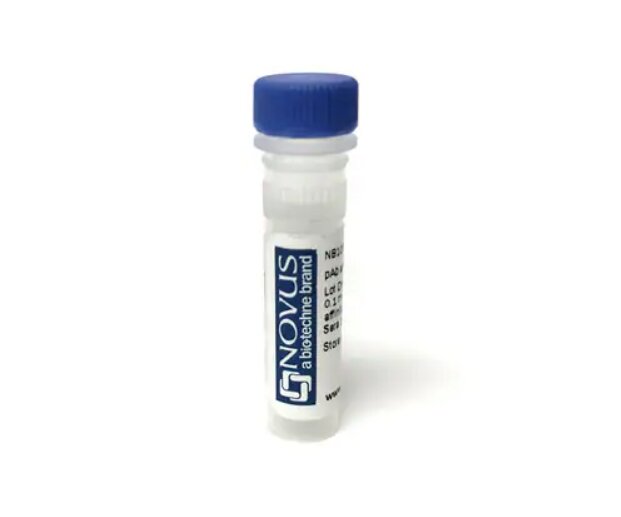
LAIR2 Antibody Pair Set
LAIR2 Antibody Pair [Biotin]
Gold Member
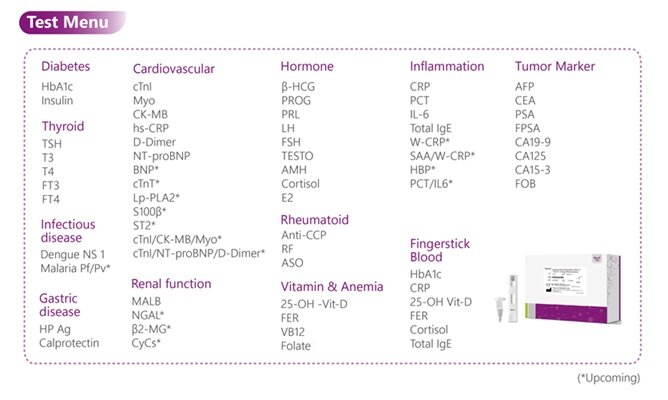
Quantitative lmmunoassay Test Menu


