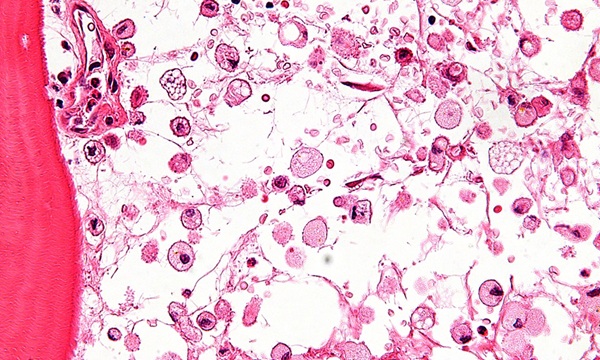
Lipid Micelles May Replace Viruses for Gene Therapy
By Biotechdaily staff writers
Posted on 17 Apr 2006
Researchers have synthesized a lipid molecule with an exceptionally large, branched, and electrically charged head group that facilitates transfection of mammalian cells with genetic material and which may replace the use of viruses for this purpose.Posted on 17 Apr 2006
Currently, engineered viruses are used as the vehicle for gene transplantation in more than 70% of clinical trials. Another method, using DNA-lipid micelles, avoids problems of immune responses to the viral agent but is only being tested in about 10% of clinical trials. The main reason for this has been the lower efficiency of the micelles as compared to the viral vectors.
Investigators at the University of California, Santa Barbara (USA), have added a novel lipid molecule to the pool available for synthesis of DNA-lipid micelles. The molecule contains a highly charged (16+) multivalent cationic lipid, MVLBG2, with a large, highly branched nanoscale head group. The unusually large head group allows "honeycomb” interaction between the lipid and DNA molecules.
The investigators used their lipid-DNA micelles to transfect two lines of mouse and two lines of human tissue culture cells. One of the lines was comprised of mouse embryonic fibroblasts (MEF) that are notoriously difficult to transfect.
Results published in the March 29, 2006, issue of the Journal of the American Chemical Society revealed that the honeycomb structure of the lipid head group greatly enhanced the micelle's ability to transfer genetic material to the target cell. Senior author Dr. Cyrus R. Safinya, professor of molecular, cellular, and developmental biology at the University of California, Santa Barbara, said, Our data confirm that MEFs are generally hard to transfect. And the new molecule is far superior for transfection of these cells as compared to commercial lipids.”
Related Links:
University of California, Santa Barbara




Platinum Member

Automated Coagulation Analyzer
Hemolumi H6
Gold Member

Fully-auto Specific Protein (Nephelometry) Analyzer
PA240

Immunofluorescence Analyzer
IFA System

LAIR2 Antibody Pair Set
LAIR2 Antibody Pair [Biotin]