






Optimal Nucleic Acid Yields From Archived Tissue
By Biotechdaily staff writers
Posted on 15 Mar 2006
Standard preservation techniques maintain tissue structure but complicate molecular analyses. A kit has been designed to extract total nucleic acids from formaldehyde or paraformaldehyde-fixed, paraffin-embedded (FFPE) tissue. Posted on 15 Mar 2006
Retrospective studies of diseased tissue at both the genomic and gene expression level depend on the ability to isolate nucleic acids from archived tissue. Preservation methods employing formaldehyde will keep the tissue structure in good condition and prevent putrefaction, but make it difficult to perform molecular analyses on samples. Nucleic acids are trapped, modified, and can also be fragmented to a degree that is incompatible with many molecular analysis techniques.
A relatively short and simple procedure has been developed to isolate nucleic acids from FFPE tissue. The RecoverAll total nucleic acid isolation kit, a product of Ambion Diagnostics (Woodward, TX, USA), yields nucleic acids that are suitable for quantitative reverse-transcriptase polymerase chain reaction (qRT-PCR), quantitative polymerase chain reaction (qPCR), mutation screening, and microarray analyses. Samples are deparaffinized using a series of xylene and ethanol washes. Next they are subjected to a rigorous protease digestion with an incubation time tailored for the recovery of either RNA or DNA. The nucleic acids are purified using a glass-filter methodology that includes an on-filter nuclease treatment, and are eluted into either water or the low-salt buffer provided. Typical yields of more than 50% that of unfixed tissue from the same sample source can be obtained with the isolation kit.
However, further modification for downstream operations such as microarray analyses, which require purer RNA than that required for qRT-PCR, might be necessary. A longer, 2-day protease digestion time is required to release substantial amounts of DNA, which can then be used for PCR and other downstream applications.
Related Links:
Ambion Diagnostics (Asuragendx)




Platinum Member

Automated Coagulation Analyzer
Hemolumi H6
Gold Member

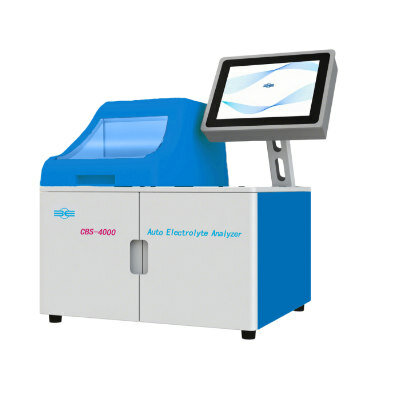
Electrolyte Analyzer
CBS-4000 (CBS-400)
New

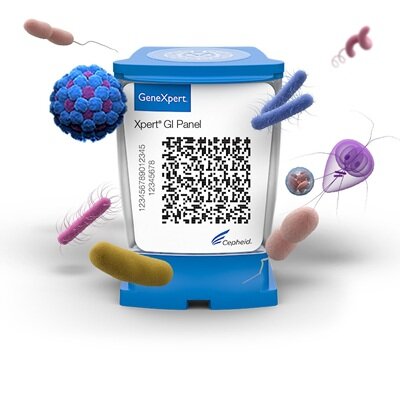
Gastrointestinal Panel
Xpert® GI Panel
New

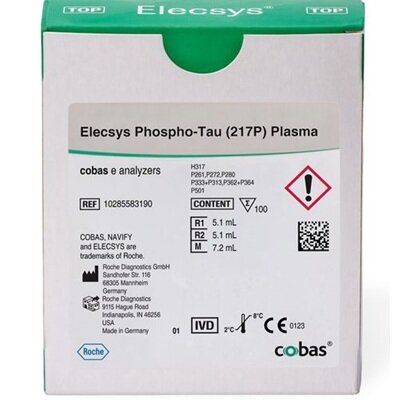
Alzheimer's Disease Biomarker Assay
Elecsys Phospho-Tau (217P) Plasma


