






Reprogramming Melanoma Cells
By Biotechdaily staff writers
Posted on 10 Mar 2006
Posted on 10 Mar 2006
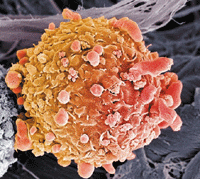
Image
The study, published in the March 7, 2006, issue of the journal Proceedings of the [U.S.] National Academy of Sciences, was performed as a collaboration involving the laboratories of Dr. Mary J. C. Hendrix, president and scientific director of the Children's Memorial Research Center, Northwestern University Feinberg School of Medicine (Chicago, IL, USA) and Dr. Paul M. Kulesa, director of Imaging at the Stowers Institute for Medical Research (Kansas City, MO, USA; www.stowers-institute.org).
This study shows the ability of malignant melanoma cells to respond to embryonic environmental signals in a chick model--in a similar way to neural crest cells, the cell type from which melanocytes originate--triggering malignant cells that express genes associated with a normal melanocyte.
The investigators also demonstrated that the malignant melanoma cells lost their tumor-causing capability as they became reprogrammed by the embryonic microenvironment to assume a more normal melanocyte-like cell type. "Using this innovative approach, further investigation of the cellular and molecular interactions within the tumor cell embryonic chick microenviroment should allow us to identify and test potential candidate molecules to control and reprogram metastatic melanoma cells,” Dr. Hendrix said.
Neural crest cells give rise to pigment cells as well as bone and cartilage, neurons, and other cells of the nervous system. During embryonic development, neural crest cells display "invasive” characteristics, similar to metastatic cancer cells, migrating from the neural tube (which becomes the brain and spinal cord) to form tissues along specific pathways.
Dr. Kulesa's laboratory transplanted adult human metastatic melanoma cells, isolated and characterized by the Hendrix laboratory group, into the neural tube of chick embryos. The transplanted melanoma cells did not form tumors. Instead, like neural crest cells, the melanoma cells invaded surrounding chick tissues in a programmed manner, distributing along the neural-crest-cell migratory pathways throughout the chick embryo.
The researchers discovered that a subpopulation of the invading melanoma cells produced markers indicative of skin cells and neurons that had not been present at the time of transplantation. When combined, the findings of this study suggest that human metastatic melanoma cells respond to and are influenced by the chick embryonic neural-crest-rich microenvironment, which may hold promise for the development of new therapeutic strategies, according to the researchers.
"This idea was pioneered 30 years ago by scientists who thought that the complex signals within an embryonic field may reprogram an adult metastatic cancer cell introduced into such an environment and cause it to contribute in a positive way to an embryonic structure,” Dr. Kulesa stated. "Today, we have advanced imaging and molecular techniques that allow us to pose the same questions within an intact chick embryo and directly study the molecular signals involved in the reprogramming. The ancestral relationship between melanoma and the neural crest provides a wonderful bridge between developmental and cancer biology.”
One of the trademarks of aggressive cancer cells, including malignant melanoma, is their unspecified, plastic nature, which is similar to that of embryonic stem cells. The Hendrix lab has shown that the unspecified or poorly differentiated cell type serves as an advantage to cancer cells by enhancing their ability to migrate, invade, and metastasize while virtually unseen by the immune system.
Related Links:
Stowers Institute for Medical Research
Northwestern U. Feinberg School of Medicine




Platinum Member

Automated Coagulation Analyzer
Hemolumi H6

Gold Member

Electrolyte Analyzer
CBS-4000 (CBS-400)


HPV Test
Allplex HPV28 Detection
New

Nucleic Acid Purification Instrument
QIAsymphony Connect


