






Bioluminescence Sheds Light on Critical Pathway
By Biotechdaily staff writers
Posted on 29 Aug 2005
Researchers have developed an in vivo bioluminescence technique that allowed them to study the kinetics of IKK (IKappa kinase), a critical enzyme in the NF-KappaB pathway, which is a key regulator of cellular activation, proliferation, and apoptosis.Posted on 29 Aug 2005
Investigators at the Washington University School of Medicine (St. Louis, MO, USA) genetically engineered a bioluminescent fusion reporter protein that incorporated firefly luciferase into IKB (IKappaB), the protein that comes immediately after IKK in the NF-KappaB pathway. A bioluminescence camera was used to take real-time measurements of the light released by the reporter protein in cell cultures and in living animals.
When the NF-KappaB pathway was enabled, IKK initiated a cascade of reactions that led to the degradation of IKB. In cells containing the IKB reporter protein, the luciferase was broken down. Increased IKK activity was measured as decreased light emitted by the cells.
Results published in the August 2005 issue of Nature Methods demonstrated the validity of the method and showed that it was possible to obtain a continuous, noninvasive readout of the kinetics of ligand-induced IKK activation and the pharmacodynamics of selective inhibitors of this and other proteins in the NF-KappaB pathway.
"Our new system allows researchers to monitor whether drugs for these conditions are hitting this exact molecular target in cell culture and laboratory animals,” said senior author Dr. David Piwnica-Worms, professor of molecular biology, pharmacology, and radiology at Washington University. "In the case of NF-KappaB, there were also methods that monitored IKK activity via changes in the levels of gene activation at the end of the pathway. But those took hours to days to deliver results, and our approach works continuously and in real time.”
Related Links:
Washington University




Platinum Member

Automated Coagulation Analyzer
Hemolumi H6
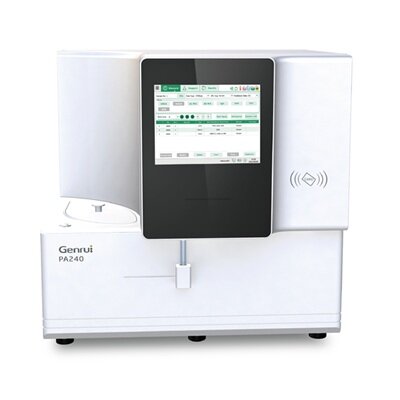
Gold Member

Fully-auto Specific Protein (Nephelometry) Analyzer
PA240
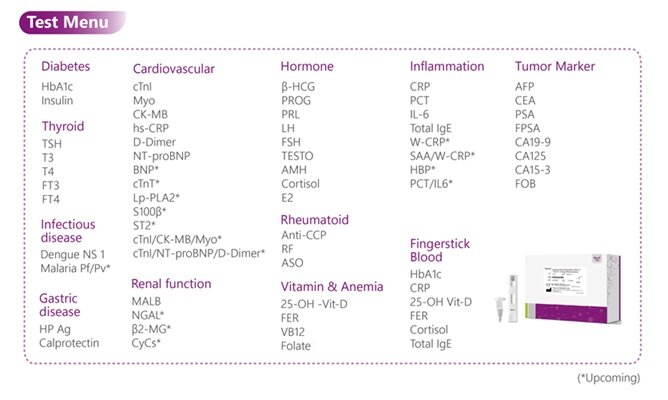
Gold Member
Quantitative lmmunoassay Test Menu

Immunofluorescence Analyzer
IFA System


