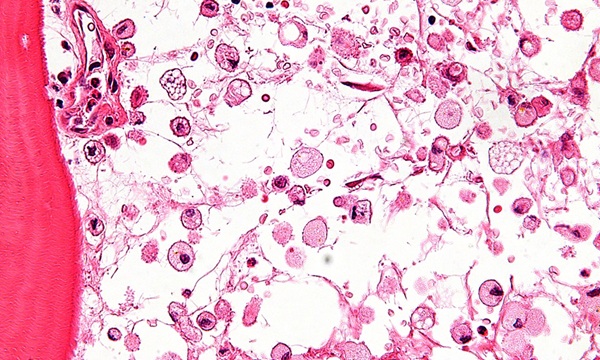
Molecular Pathway Links HBV to Liver Cancer
By Biotechdaily staff writers
Posted on 11 Aug 2005
Researchers have traced the molecular pathway that links infection with hepatitis B virus (HBV) to the development of liver cancer (hepatocellular carcinoma or HCC). HCC is one of the most prevalent human malignancies, and individuals who are chronic HBV carriers have a greater than 100-fold increased relative risk of developing HCC.Posted on 11 Aug 2005
Investigators at the University of Texas M. D. Anderson Cancer Center (Houston, USA) studied gene expression in cancer cell lines growing in tissue culture. While expression of the oncogene beta-catenin has been shown to be significantly greater in cancer cells than in normal cells, the current study revealed how a gene carried by HBV acts to trigger over-expression of beta-catenin.
They reported in the July 25, 2005, issue of Molecular Cell that the HBV gene HBX produces a protein that initiates the inhibition of the tumor suppressor gene GSK-3Â, whose role is to degrade beta-catenin proteins that enter the interior of a cell. The pathway to GSK-3B inhibition involves the enzyme Erk (extracellular regulated kinase), which after activation by HBX associates with GSK-3B and phosphorylates it as a specific amino acid residue. This step primes GSK-3B for subsequent phosphorylation by p90RSK, which results in inactivation of GSK-3B. Without GSK-3B, beta-catenin builds up inside the cell, a situation found in 50 to 70% of all HCC tumors.
"This study identified a novel mechanism for how hepatitis B primes liver cells to turn cancerous, and what we found has potential relevance for other cancers as well,” said senior author Dr. Mien-Chie Hung, professor of molecular and cellular oncology at the M.D. Anderson Cancer Center.
Related Links:
University of Texas M. D. Anderson Cancer Center




Platinum Member

Automated Coagulation Analyzer
Hemolumi H6

Gold Member

Platelet Function Analyzer
PL-12

CMV CLIA Diagnostic
CLIA CMV IgA Screen Group

Electrolyte Analyzer
BKE-B