Treatment Enhances CF Infections
By Biotechdaily staff writers
Posted on 13 Jun 2005
Cells sent to fight infections in the lungs of patients with cystic fibrosis (CF) instead enhance the development of bacterial infections, according to a new study.Posted on 13 Jun 2005
Infections with the bacteria Pseudomonas aeruginosa are a major cause of sickness and death in CF patients. P aeruginosa is widespread in the environment and repeatedly infects most CF patients. While aggressive treatment with antibiotics can fight most initial infections, over time the bacterial infections often become permanent. More than 80% of adults with CF are chronically infected with P aeruginosa. The chronic infection and inflammation associated with the bacteria accelerate damage to the lungs, leading finally to respiratory failure and death.
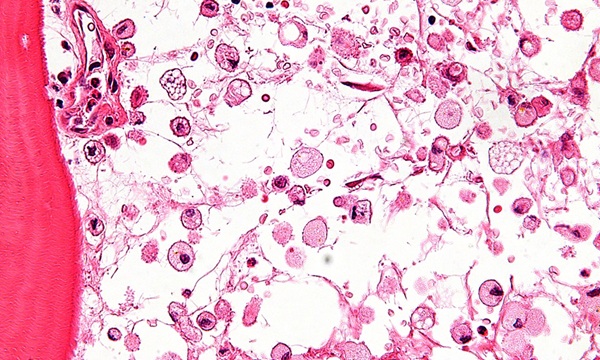
Researchers at National Jewish Medical and Research Center (Denver, CO, USA) found that Pseudomonas establishes a chronic infection in the airway of CF patients by creating a biofilm, a three-dimensional structure composed of bacteria encased in an extracellular matrix. Once the biofilm develops, the bacteria become significantly more resistant to both antibiotics and the immune system. Although the immune system sends in massive numbers of neutrophils to eradicate the bacteria, the short-lived cells die after a short time and cellular debris accumulates in the airway of CF patients.
In a series of experiments, senior author Dr. Jerry Nick and colleagues found that the contents of dead neutrophils, especially DNA and a filament called actin, provide a scaffolding for Pseudomonas to construct biofilm. They also found that the development of P aeruginosa biofilms increased by two and a half to three times in the presence of neutrophils, compared to cultures without neutrophils.
"As the neutrophils die and fall apart, their contents provide an excellent substrate for the development of biofilms,” observed Dr. Nick. "In turn, these biofilms allow Pseudomonas to survive despite intense medical treatment.”
The researchers also found that an enzyme called DNase, which breaks apart strands of DNA, inhibits the development of biofilms. DNase is already used to break up the thick mucus that develops in the lungs of CF patients. Dr. Nick believes it might also be useful in preventing the development of Pseudomonas biofilms. The research results of Dr. Nick and his colleagues were reported in the June 2005 issue of Infection and Immunity.
Related Links:
National Jewish Medical




Platinum Member

Automated Coagulation Analyzer
Hemolumi H6
Gold Member

Fully-auto Specific Protein (Nephelometry) Analyzer
PA240

New
Silver Member

Connectivity Solution
EKF Link


All-in-One Molecular System
AIO M160