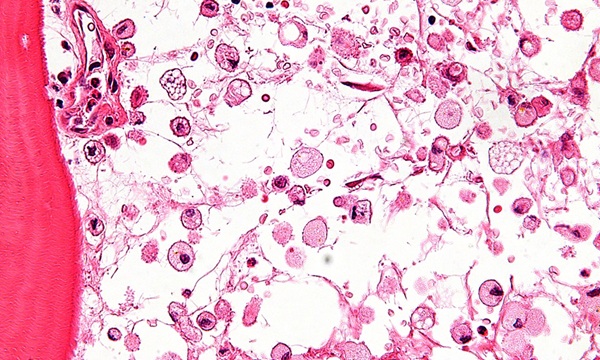
HDL Primarily Produced in the Liver
By Biotechdaily staff writers
Posted on 17 May 2005
Researchers have used a mouse model to show that although the gene that controls production of HDLs (high density lipoproteins), the transporter of "good cholesterol,” is found in many different tissues, most HDLs are actually produced in the liver.Posted on 17 May 2005
Investigators at Wake Forest University Baptist Medical Center (Winston-Salem, NC, USA) genetically engineered a line of mice lacking the gene ABCA1 in their livers. The protein produced by ABCA1 controls the rate-limiting step in HDL particle assembly by mediating efflux of cholesterol and phospholipids from cells to lipid-free apoA-I, which forms nascent HDL particles.
Results published in the May 2005 issue of the Journal of Clinical Investigation revealed that HDL levels in the blood of the modified animals were reduced by nearly 80% from those seen in control mice. Circulating HDL was broken down in the kidneys of the engineered mice at a rate twice that of normal animals, while there was no difference in the rate of HDL catabolism in their livers. The lipid profiles of the engineered mice closely resembled those seen in the rare human syndrome Tangier disease.
"In studies of mice, we provided the first definitive proof that the liver is the source of about 80% of the high-density lipoprotein, or "good” cholesterol, that circulates in the blood,” said senior author Dr. John S. Parks, professor of pathology at Wake Forest University Baptist Medical Center. "These results profoundly alter our concept of how HDL is manufactured in the body and establish the liver as the single most important source of HDL in a mouse model. Understanding more about how HDL is produced could lead to new treatments to raise its levels.”




Platinum Member

Automated Coagulation Analyzer
Hemolumi H6
Gold Member

Quantitative POC Immunoassay Analyzer
EASY READER+
New

MR-proADM Test
B•R•A•H•M•S MR-proADM KRYPTOR test

New
Silver Member

Connectivity Solution
EKF Link