International RNA Project
By Biotechdaily staff writers
Posted on 29 Mar 2005
An international team of RNA scientists, called the RNA Ontology Consortium, has been formed to develop a shared vocabulary and system for describing, cataloging, and comparing RNA findings.Posted on 29 Mar 2005
RNA research has been exploding in recent years as scientists worldwide discover the role of RNA in genetics, health, disease, and the development of organisms. Creating the new consortium will require incorporating the methods and vocabularies of chemists, molecular biologists, genomicists, information scientists, and structural biologists. The ontology team will identify all RNA motifs, or repeated patterns, mentioned in the literature or appearing in databases in order to agree upon and write a definition for each motif. The consortium's work will be accessible on the Internet to the various RNA research communities.
"The consortium will develop a common vocabulary and scientific concepts relating RNA structure and function to allow RNA scientists worldwide to communicate with one another as well as to integrate different kinds of information they obtain about RNA molecules,” explained Dr. Neocles Leontis, professor of chemistry at Bowling Green State University (OH, USA), chosen by the RNA Society to head the consortium and serve as principal investigator.
The U.S. National Science Foundation is providing U.S.$500,000 for the five-year project as one of its Research Coordination Networks. The consortium will include scientists from the United Kingdom, France, Australia, Canada, and the United States. Some researchers will focus on the sequences of RNA molecules, while others will study their three-dimensional (3D) structures. A major focus of the project will be to integrate the databases of RNA sequences and 3D structures.
"The hardware (proteins) for mice and humans is practically the same, but clearly mice and humans are different,” noted Dr. Leontis. "Since the hardware is the same, the difference between mice and humans must be at the software level, which determines how the hardware is used. We are beginning to see that RNA is that software.”
Related Links:
Bowling Green State U.




Platinum Member

Automated Coagulation Analyzer
Hemolumi H6
Gold Member

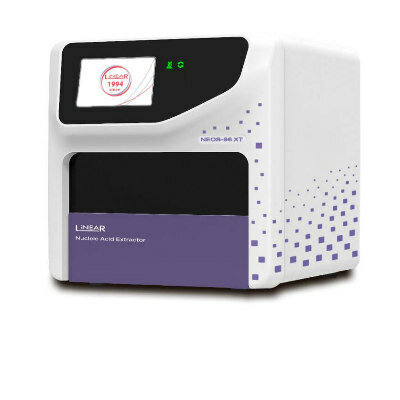
Nucleic Acid Extractor System
NEOS-96 XT

New
Silver Member

Connectivity Solution
EKF Link
New

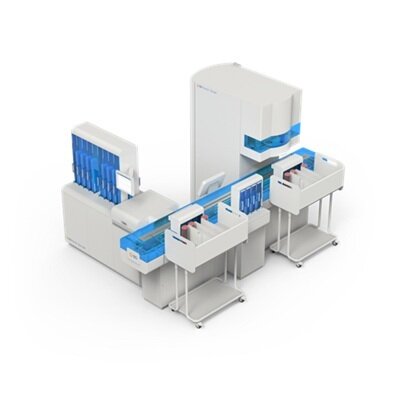
Microbiology Laboratory Automation Solution
BD Kiestra™ ReadA+BarcodA