






Nanoprobes Visualize Tumors Through Skin
By Biotechdaily staff writers
Posted on 17 Feb 2005
Nano-sized particles entrenched with bright, light-emitting molecules have helped scientists see tumors more than 1 cm below the skin surface utilizing only infrared light. Posted on 17 Feb 2005
A group of investigators from the University of Pennsylvania (Penn, Philadelphia, PA, USA) and the University of Minnesota (Minneapolis-St. Paul, MN, USA) has embedded fluorescent substances called porphyrins within the surface of a polymersome, a cell-like vesicle, to image a tumor within a live laboratory rat. Their findings were published in the February 7, 2005, issue of the journal [U.S.] National Academy of Science.
"We have shown that the dispersion of thousands of brightly emissive multi-porphyrin fluorophores within the polymersome membrane can be used to optically image tissue structures deep below the skin--with the potential to go even deeper,” remarked Dr. Michael J. Therien, a professor of chemistry at Penn. "It should also be possible to use an emissive polymersome vesicle to transport therapeutics directly to a tumor, enabling us to actually see if chemotherapy is really going to its intended target.”
Polymersomes work like the bilayered membranes of living cells. While cell membranes are created from a double layer of fatty phospholipid chains, a polymersome is made up of two layers of synthetic co-polymers. Similar to a living cell, the polymers' own membrane has a hydrophobic core. This research demonstrates that the fluorophores uniformly disperse within this core, generating a nanometer-sized, light-emitting structure.
The investigators showed in the study how they can utilize these emissive polymersomes to target markers on the surface of a certain kind of tumor cell. When exposed to near-infrared light, which can move through tissue, the fluorophores within the polymersome react with a bright near-infrared signal that can then be detected.
There is growing interest in developing new technology that will enable optical imaging of cancerous tissue, providing applications that cost less and are more accessible than magnetic resonance imaging (MRI)-based techniques, and without debilitating side effects associated with radioactivity, according to Dr. Therien. With this new imaging technique, the fluorophores can also be triggered to respond to different wavelengths of near-infrared light. This creates a setting for using emissive polymersomes to target a host of cancer cell-surface markers in the body simultaneously.




Platinum Member

Automated Coagulation Analyzer
Hemolumi H6
Gold Member

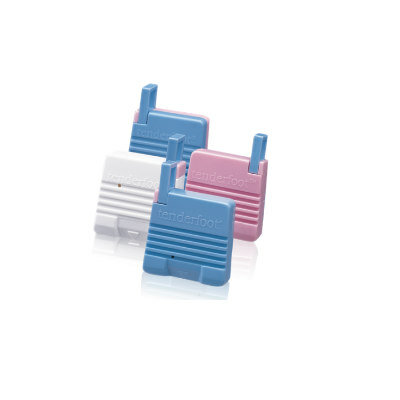
Neonatal Heel Incision Device
Tenderfoot
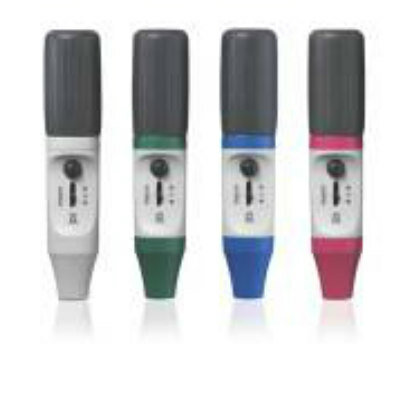

Manual Pipetting Aid
Pipette Controllers macro
Platinum Member
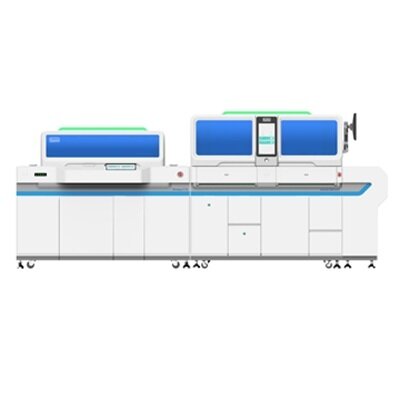
Integrated Biochemical & Immunological System
Biolumi CX Solution X10+C10


