Rare Plant Stops Tumor Growth in Lab
By Biotechdaily staff writers
Posted on 10 Feb 2005
A compound derived from a rare South American plant has shown the ability to stop the growth of human breast cancer cells in laboratory cultures.Posted on 10 Feb 2005
The compound, called SL0101, comes from a plant called Forsteronia refracta, a member of the dogbane family found in the Amazon rain forest. The compound works like a key in a molecular lock. It inhibits the action of a cancer-linked protein called RSK, which the researchers discovered is important for controlling the growth of breast cancer cells. However, SL0101 does not alter the growth of normal breast cells.
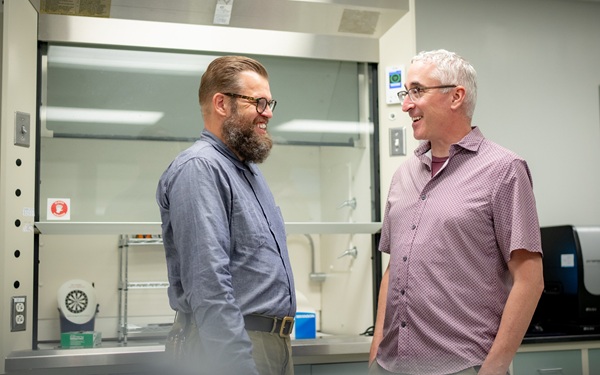
"By preventing RSK from working, we completely stopped the growth of breast cancer cells but did not affect the growth of normal breast cells,” said Deborah Lannigan, assistant professor of microbiology at the University of Virginia Cancer Center (Charlottesville, USA). Dr. Lannigan and Jeffrey Smith, a research assistant professor of pathology at the center, have begun testing the compound in animal models. Their work was reported in the February 1, 2005, issue of Cancer Research.
"We will modify the structure of SL0101, if necessary, to eventually find a compound that can be carried through to human clinical trials,” said Dr. Smith. "But human trials will likely be years down the road.”
Related Links:
U. of Virginia Cancer Center




Platinum Member

Automated Coagulation Analyzer
Hemolumi H6
Gold Member

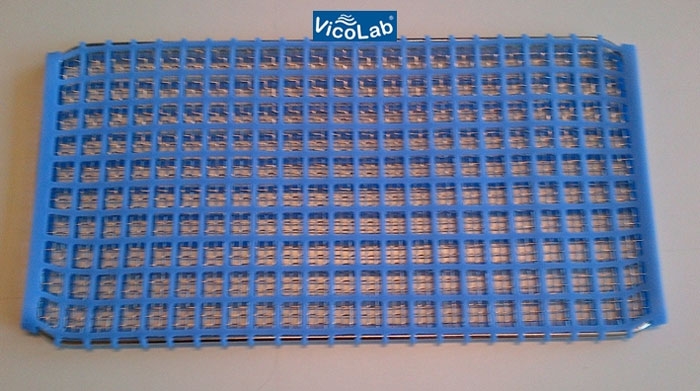
NEW PRODUCT : SILICONE WASHING MACHINE TRAY COVER WITH VICOLAB SILICONE NET VICOLAB®
REGISTRED 682.9
New

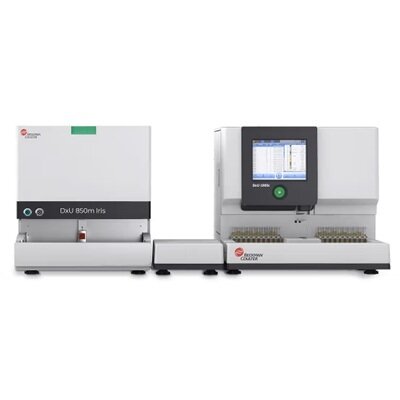
Fully Automated Urinalysis System
DxU 1800 Fully Automated Urinalysis System
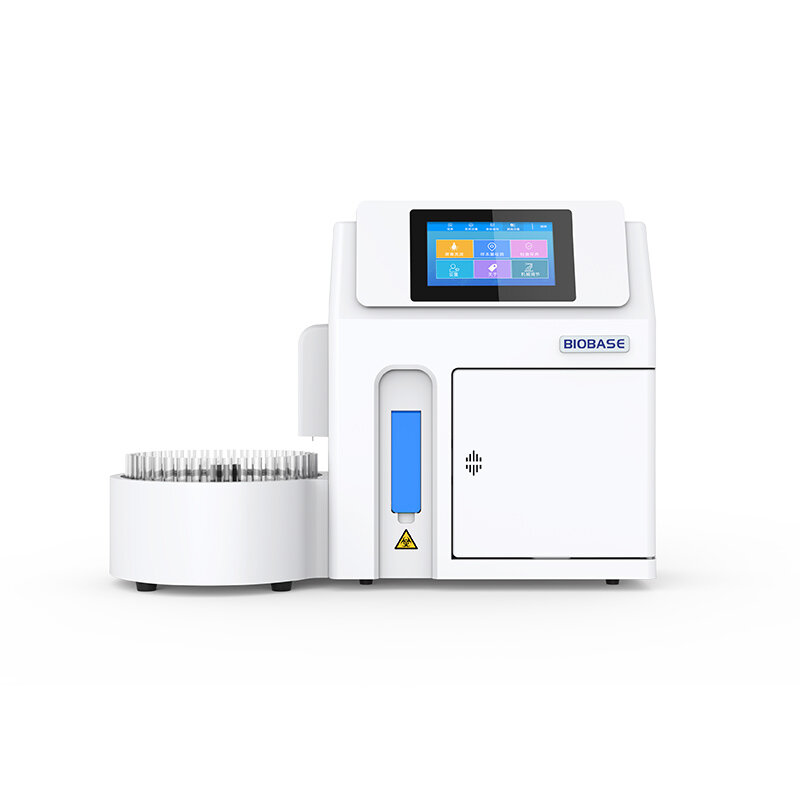

Electrolyte Analyzer
BKE-B