






Clues Found to Mystery of Gene Deserts
By Biotechdaily staff writers
Posted on 16 Jan 2005
Similar to the living deserts of the American Southwest, the so-called "gene deserts” in living organisms' DNA are swarming with activity; the hard part is knowing where to look for this activity. A new map to the location of DNA snippets that are vital to biologic, medical, and evolutional studies for these gene deserts could emerge from this new research.Posted on 16 Jan 2005
Gene deserts are long extended sections of DNA between what were once believed to have no biologic function, and were rejected as "junk DNA.” However, as researchers look further into the DNA's double helix, they are finding that many of these noncoding pieces actually play a significant role in regulating gene activity.
Previous studies have demonstrated that that gene deserts contain DNA sequences that can turn genes on and off significant distances along the DNA molecule. The same scientists, paradoxically, discovered that they were recently able to eliminate large amounts of gene desert DNA from lab mice with no perceptible effect on the animals. Many of the removed sequences are shared by mice and humans, and therefore may have no useful function in humans as well.
In trying to solve the paradox and to help scientists more easily find important segments among the immense stretches of DNA deserts, scientists from Lawrence Livermore (U.S.) National Laboratory (LLNL; Livermore, CA, USA), Lawrence Berkeley (U.S.) National Laboratory (LBNL; Berkeley, CA, USA), and the Pennsylvania State University (University Park, PA, USA) have designed computational tools to decode gene regulation by comparing the genomes of many different species. The investigators published their results in the December 9, 2004, online version of the journal Genome Research.
When they utilized the tools to compare the human genome with the recently sequenced chicken genome, they found that gene deserts fall into two distinct categories: those that remain comparatively constant throughout years of evolution, and those that experience considerable variation.
Investigators said there are many pieces of evidence that demonstrate that the stable desert areas, which are able to withstand genomic reshufflling and fend off encroachment by repetitive segments of junk DNA, are home to an amazingly large portion of the genome's noncoding regulatory elements.
"There are many indications that stable gene deserts represent treasure boxes of multiple gene regulatory elements, guarding the proper complex function of the flanking genes,” said Dr. Ivan Ovcharenko, a bioinformatics researchers at LLNL's Computation Directorate, who led the study.
The variable areas, however, which comprise approximately two-thirds of the gene deserts and as much as 20% of the whole three-billion-base-pair human genome, can be devoid of biologic function, suggesting that a considerable portion of the genome may not be necessary. "This information is very important for researchers looking for mutations leading to disease because it highlights large areas of the genome that are not likely to be involved in causing diseases,” added Dr. Ovcharenko.
Dr. Eddy Rubin, director of the U.S. Department of Energy's Joint Genome Institute (JGI; Walnut Creek, CA, USA), observed, "If you're a good hunter looking for genetic clues to disease, it might be a good idea to steer clear of regions that are devoid of critical functions or importance,” including those that were removed in the earlier mouse studies.
Related Links:
Lawrence Livermore National Laboratory
Lawrence Berkeley National Laboratory




Platinum Member

Automated Coagulation Analyzer
Hemolumi H6
Gold Member

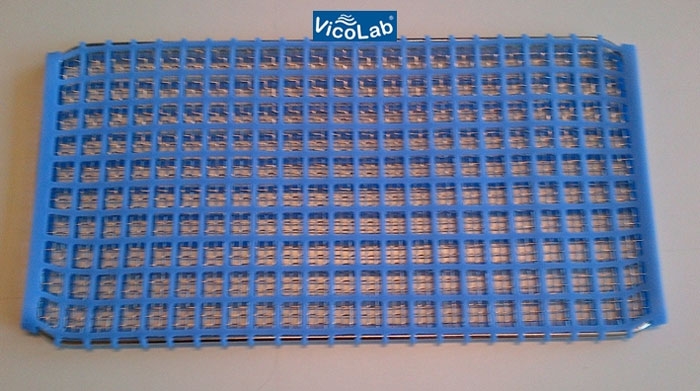
NEW PRODUCT : SILICONE WASHING MACHINE TRAY COVER WITH VICOLAB SILICONE NET VICOLAB®
REGISTRED 682.9

Immunofluorescence Analyzer
IFA System

Gold Member

Fully-auto Specific Protein (Nephelometry) Analyzer
PA240


