






Molecular Markers of Aging Identified
By Biotechdaily staff writers
Posted on 16 Nov 2004
Investigators have made an important finding in the understanding of cellular aging. New research demonstrates that as tissues and cells age, the expression of two proteins called p16INK4a and ARF drastically increases. This increase in expression, more than 100-fold in some tissues, suggests a strong link between cellular aging and upregulation, or increased production, of p16INK4a and ARF.Posted on 16 Nov 2004
"At the very least, our work suggests that looking at the expression of one or both proteins will make a great biomarker of aging--a tool to clinically determine the actual molecular age of people, as opposed to just their chronological age. We all know people that we consider to be a young 65, and we believe they won't demonstrate as much p16INK4a or ARF expression as others of the same age,” said Dr. Normal Sharpless, the senior author of the study, from the University of North Carolina at Chapel Hill Lineberger Comprehensive Cancer Center (UNC, NC, USA) and assistant professor of medicine and genetics at UNC's School of Medicine. The study was published in the November 1, 2204, issue of the Journal of Clinical Investigation.
In addition to finding molecular targets that may slow down aging in the future, the study may also provide clinical applications that can be used right now. Understanding the molecular age of a tissue may also help physicians pick the younger-appearing, most viable tissue and organs for transplantation, to predict how well a patient will heal after surgery, to be able to distinguish the regenerative capability of a patient's bone marrow, and predict future chemotherapy toxicity in a cancer patient.
Both ARF and p16INK4a are known powerful tumor suppressors. This study suggests that the significant anticancer function of these proteins to restrict cellular growth might in turn cause aging. "Proliferation of cells is important in the repair and regrowth of tissues. In fact, we grow old in part because our bodies' ability to regenerate tissues decreases as we age,” said Dr. Sharpless. "We believe an untoward effect of increased p16INK4a and ARF expression outside of cancer is a decrease in cellular proliferation needed to sustain this regeneration.”
The investigators also discovered that the increase of p16INK4a and ARF can be considerably inhibited by decreasing caloric intake, a known decelerator of aging. This effect suggests that decreased expression of p16INK4a and ARF could mediate this anti-aging result of caloric restriction.
"Our results suggest that going on a short-term diet will not reverse the aging process; only long-term restrictions appeared to have an effect on p16INK4a and ARF expression. Therefore, our results would be consistent with the idea that short-term caloric restriction prior to surgery would improve postoperative wound healing,” noted Dr. Sharpless.
This research has strong implications for stem cell regeneration, he added. Stem cells are self-replenishing cells than constantly differentiate and divide into the component cells that comprise the tissues in the human body.
"As tissue stem cells age, they appear to express more p16INK4a and ARF, which would stop those cells from replenishing. As people age, they could just run out of functioning stem cells,” said Dr. Sharpless.
Stem cell depletion could affect the body's capacity to heal after surgery or injury, and may also predict the ability of specific diseases, such as cardiomyopathy, to progress, according to Dr. Sharpless.
Related Links:
UNC Lineberger Comprehensive Cancer Center




Platinum Member

Automated Coagulation Analyzer
Hemolumi H6

Gold Member

Nucleic Acid Extractor System
NEOS-96 XT


Automated Clinical Chemistry Analyzer
Envoy 500+
New
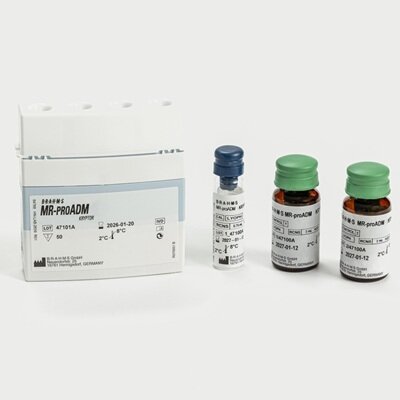
MR-proADM Test
B•R•A•H•M•S MR-proADM KRYPTOR test


