Ubiquitin Ligase Protects Against Autoimmune Disease
By Biotechdaily staff writers
Posted on 12 Sep 2004
Researchers have found that the ubiquitin ligase Cbl-b plays a critical role in preventing the development of arthritis and other autoimmune diseases.Posted on 12 Sep 2004
Ubiquitin (Ub) is a small protein composed of 76 amino acids. This protein is found in all cells of eukaryotic organisms. Ubiquitin is highly conserved, meaning that the amino acid sequence does not differ much when very different organisms are compared. For example, there are only three differences in the sequence when Ub from yeast is compared to human Ub. This strong sequence conservation suggests that the vast majority of amino acids that make up Ub are essential, as apparently any mutations that have occurred over evolutionary history have been removed by natural selection.
Ubiquitin becomes attached covalently to certain residues of other proteins. The attachment of a chain of ubiquitins tags a protein for intracellular proteolytic destruction. Ubiquitin ligases are a class of enzymes that determines the substrate protein to which a ubiquitin will be linked and that binds the ubiquitin to this protein. Many ubiquitin ligases are multi-subunit proteins.
In the current study, investigators from the La Jolla Institute for Allergy and Immunology (San Diego, CA, USA) and the Institute for Molecular Biotechnology of the Austrian Academy of Sciences (Vienna, Austria) worked with mice genetically engineered to lack the gene for Cbl-b. These mice as well as a normal control group were injected with substances known to induce arthritis. Results reported in the August 2004 issue of Immunity revealed that while the normal mice did not respond to the injection, the mice lacking Cbl-b developed severe symptoms of arthritis.
"We concluded that the Cbl-b molecule was affecting the T cell's immune response, giving the immune system of the normal mice the ability to ‘tolerate' the arthritis antigens,” explained contributing author Dr. Yun-Cai Liu, a researcher at the La Jolla Institute for Allergy and Immunology. "The mice without the Cbl-b molecule could not tolerate these substances and their T cells began attacking their own tissues, leading to the development of the autoimmune disease.”




Platinum Member

Automated Coagulation Analyzer
Hemolumi H6
Gold Member

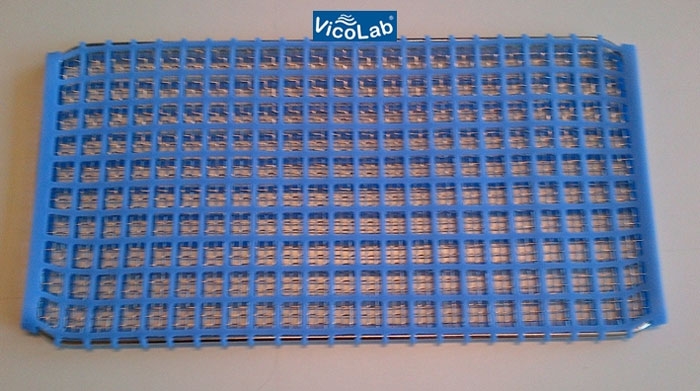
NEW PRODUCT : SILICONE WASHING MACHINE TRAY COVER WITH VICOLAB SILICONE NET VICOLAB®
REGISTRED 682.9


Portable POCT Blood Gas Analyzer
BD100
New

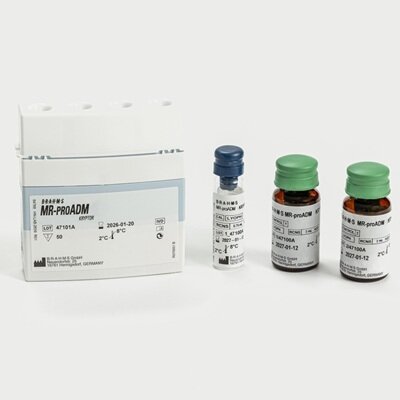
MR-proADM Test
B•R•A•H•M•S MR-proADM KRYPTOR test