






New Synchrotron Dazzling Light Source
By Biotechdaily staff writers
Posted on 12 Feb 2004
A new x-ray light produces beams that are 10 billion times brighter than dental x-rays, forming a powerful microscope for research in biology, chemistry, and materials science. Posted on 12 Feb 2004
The new light source, called SPEAR3 (Stanford Positron Electron Asymmetric Ring), incorporates the latest technology, much of it developed at the Stanford Synchroton Radiation Laboratory (SSRL, Stanford University, Palo Alto, CA, USA). An estimated 2,000 U.S. scientists will use the light in conducting research.
Synchroton light is created when electrons traveling the speed of light take a curved path around a storage ring, a structure in which high-energy particles can be circulated many times and thus "stored.” The electrons emit electromagnetic light in x-rays through infrared wavelengths. The resulting light beam has characteristics that make it ideal for revealing the intricate architecture and utility of many kinds of matter. SPEAR3 and the upgraded facility were built by the U.S. Department of Energy and the U.S. National Institutes of Health.
"SPEAR's brilliant x-ray beams provide the ability to study smaller objects at higher resolution. In many cases, the greater brightness at SPEAR3 will also enable researchers to take their data faster, do more difficult experiments, and use smaller samples of material,” noted SSRL physicist John Arthur.




Platinum Member

Automated Coagulation Analyzer
Hemolumi H6
Gold Member

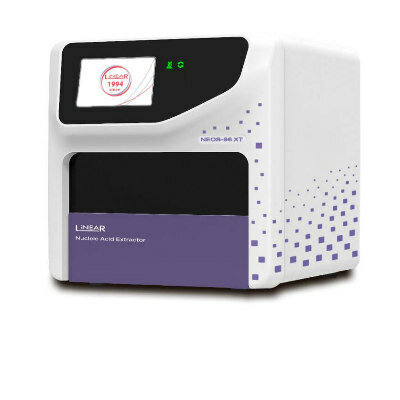
Nucleic Acid Extractor System
NEOS-96 XT
New

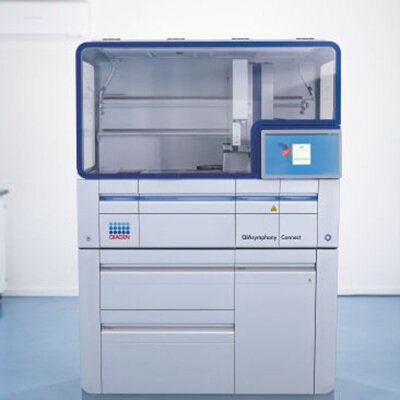
Nucleic Acid Purification Instrument
QIAsymphony Connect

LAIR2 Antibody Pair Set
LAIR2 Antibody Pair [Biotin]


