Energy Requirement for DNA Synthesis Determined
By Biotechdaily staff writers
Posted on 08 Dec 2003
Researchers studying the physical chemistry of biologic processes used stopped-flow calorimetry to measure the overall enthalpy change associated with template-directed nucleotide insertion and DNA extension.Posted on 08 Dec 2003
Enthalpy is a quantity with units of energy symbolized H and defined by H = E + PV, where E is internal energy, P is pressure, and V is volume. Enthalpy is useful because at constant pressure it measures the quantity of heat that flows into or out of a system, hence differences in enthalpy can be measured directly by calorimetry. The difference in enthalpy between a compound and the elements of which it is composed is called the enthalpy of formation.
Investigators at Rutgers University (Piscataway, NJ, USA) used families of hairpin self-priming templates in conjunction with an exonuclease-free DNA polymerase to study primer extension by one or more adenine or thymidine residues. The calorimeric method they employed was able to detect changes in energy consumption accurate to within a millionth of a calorie.
Results published in the November 17, 2003, online edition of the Proceedings of the [U.S.] National Academy of Sciences showed exothermic heats between -9.8 and -16.0 kcal/bp for template-directed enzymatic polymerization. These extension enthalpies depended on the identity of the inserting base, the primer terminus, and/or the preceding base.
"Our measurements represent the first direct determination of the energies and their transformations in this most fundamental process in biological chemistry,” said senior author Dr. Kenneth J. Breslauer, director of the division of life sciences at Rutgers University. "These energy studies are essential to bridge the gap between structure and function, a bridge that is needed for our understanding of how biological processes operate and are controlled.”
Related Links:
Rutgers University




Platinum Member

Automated Coagulation Analyzer
Hemolumi H6
Gold Member

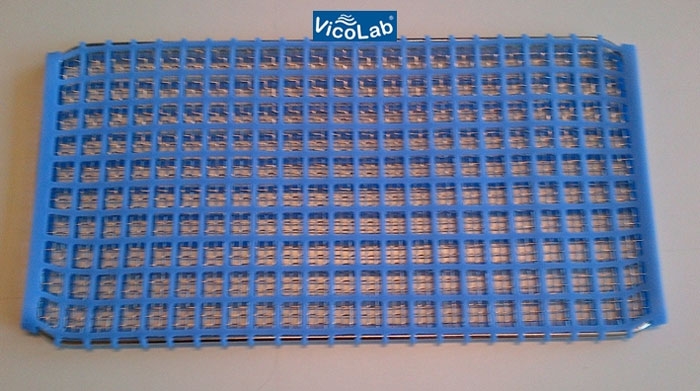
NEW PRODUCT : SILICONE WASHING MACHINE TRAY COVER WITH VICOLAB SILICONE NET VICOLAB®
REGISTRED 682.9
Platinum Member
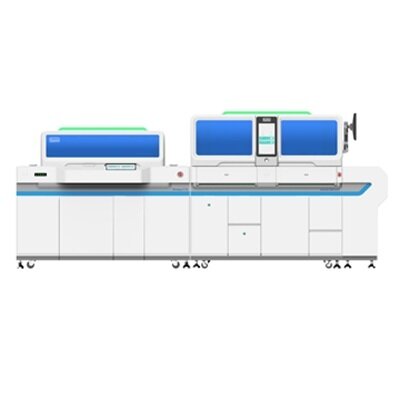
Integrated Biochemical & Immunological System
Biolumi CX Solution X10+C10
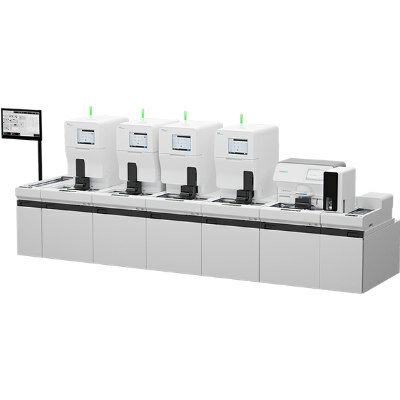

Automated Urinalysis Solution
UN-9000