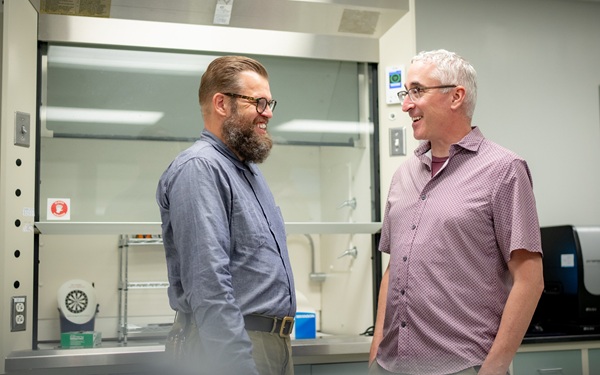
Fluorescence-Based Assay for Alzheimer's Research
By Biotechdaily staff writers
Posted on 07 Oct 2003
A new fluorescence-based assay utilizes a super-quenching polymer that offers greater sensitivity and specificity for high-throughput screening and drug discovery related to Alzheimer's disease.Posted on 07 Oct 2003
A technique commonly used in screening new drug candidates is fluorescence resonance energy transfer (FRET), The new assay offers several advantages over conventional FRET. Typically, FRET reactions couple a single fluorophore with a single quencher molecule. The new assay couples a quencher molecule with a fluorescent polymer chain. Each quencher alters fluorescence of several hundred fluorophores. This enhanced activity provides not only greater sensitivity and specificity but also takes less time for results and reduces costs.
The assay, called QTL Lightspeed Beta-Secretase Assay Kit, combines high sensitivity with high speed for screening potential inhibitors against beta-secretase. The major constituent of the senile plaques associated with Alzheimer's disease is the beta-amyloid peptide, generated by the activity of the enzyme beta-secretase in the brain. The assay is the product of QTL Biosystems, LLC (Santa Fe, NM, USA).
"Because the QTL Lightspeed Beta-Secretase Assay Kit generates a large signal, researchers will be able to generate results that offer better signal-to-noise ratio, more robustness, enhanced sensitivity, and quicker time to results, even at the highest throughput densities,” said Dunan McBranch, Ph.D., CEO of QTL Biosystems.
Related Links:
QTL Biosystems




Platinum Member

Automated Coagulation Analyzer
Hemolumi H6
Gold Member

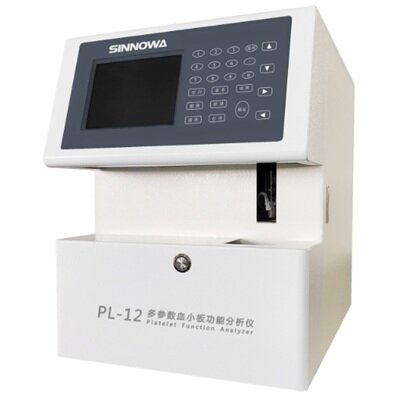
Platelet Function Analyzer
PL-12
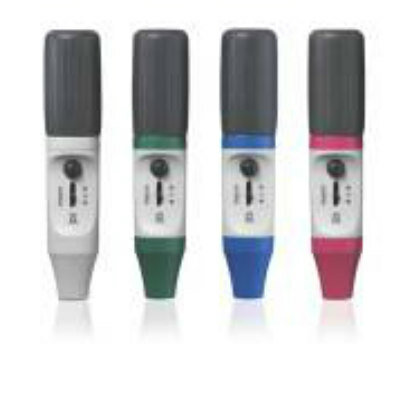

Manual Pipetting Aid
Pipette Controllers macro
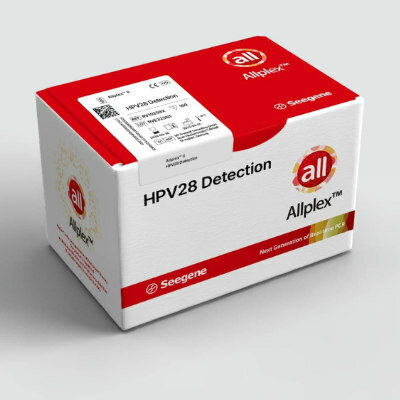

HPV Test
Allplex HPV28 Detection