AI Tool Improves Accuracy of Cancer Liquid Biopsy for Therapy Selection
Posted on 11 Jun 2026
Liquid biopsy is increasingly used to guide targeted therapy by detecting tumor-derived mutations in blood, but distinguishing true tumor signals from background noise remains challenging. Age-related clonal hematopoiesis in white blood cells can generate variants that mimic tumor mutations and complicate interpretation, especially in previously treated patients. This diagnostic noise can risk misdirecting oncology therapy selection. New findings demonstrate a machine learning approach that classifies mutation origin in plasma cell-free DNA, improving the accuracy of liquid biopsy results.
Johns Hopkins Kimmel Cancer Center (Baltimore, MD, USA) investigators developed plasmaCHORD, a machine learning model designed to determine whether variants detected in plasma originate from tumor or from white blood cells. The approach targets a specific preanalytical challenge in liquid biopsy interpretation by filtering biologic noise that can lead to incorrect therapy selection.
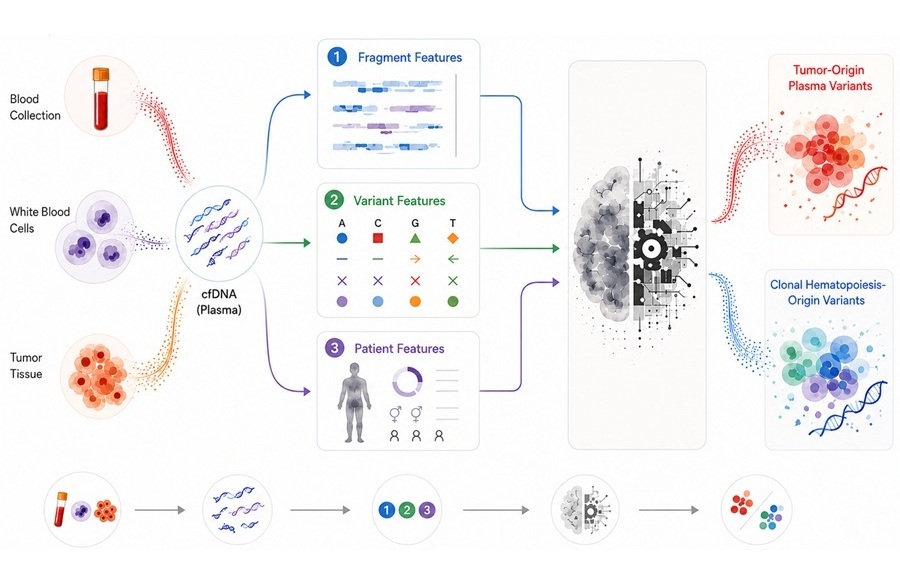
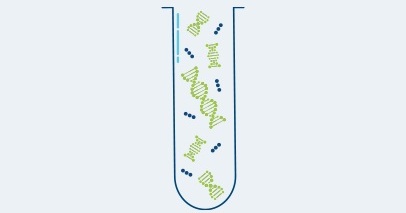
The model analyzes patterns in cell-free DNA (cfDNA) fragmentation that differ between tumor-derived DNA and white blood cell–derived DNA, producing distinct cfDNA fragmentation profiles. In addition to fragmentation signatures, the algorithm incorporates patient age and genomic context, including the gene and mutation type. These combined features enable an origin estimate for each detected variant in routine liquid biopsy results.
Investigators trained plasmaCHORD using liquid biopsy samples from 225 patients with breast, colorectal, esophageal, ovarian, or non-small cell lung cancer, and verified accuracy with matched sequencing of tumor cells and white blood cells to establish the true source of detected mutations. External testing was performed in a separate cohort of 114 patients with breast, prostate, or non-small cell lung cancer from another institution that used a different liquid biopsy sequencing platform. In that validation set, the model improved correct classification of clinically relevant mutations from approximately 50% to 83%, demonstrating consistent performance across platforms.
The work also provided proof of concept for clinical usefulness: predictions of mutation origin helped clinicians avoid selecting likely ineffective therapies for patients evaluated at the Johns Hopkins Molecular Tumor Board. The research was published on May 1 in Clinical Cancer Research. Additional contributors on the study were from Vanderbilt University, LabCorp, the Netherlands Cancer Institute, and University Medical Center Utrecht.
"About one-third of mutations detected in tumor-naive liquid biopsies can originate from white blood cells, and our ability to match targeted therapies to each patient's genomic profile depends on our ability to distinguish tumor mutation from biological noise," said Valsamo Anagnostou, M.D., Ph.D., Alex Grass Professor of Oncology and leader of the Johns Hopkins Molecular Tumor Board at the Johns Hopkins University School of Medicine.
"When you do a liquid biopsy, and you get the report back, and you see mutations, you do not know if the mutations are coming from the tumor or the white blood cells. If you want to select a mutation-targeted drug to treat the cancer, you want to make sure you are targeting mutations in the cancer and not mutations in the white blood cells," said Jenna Canzoniero, M.D., M.S., co-first author and assistant professor of oncology at the Johns Hopkins University School of Medicine.
Related Links
Johns Hopkins Kimmel Cancer Center