Siemens Introduces New Intelligent, Integrated IVD Solutions Virtually at EUROMEDLAB 2021
|
By LabMedica International staff writers Posted on 29 Nov 2021 |


|
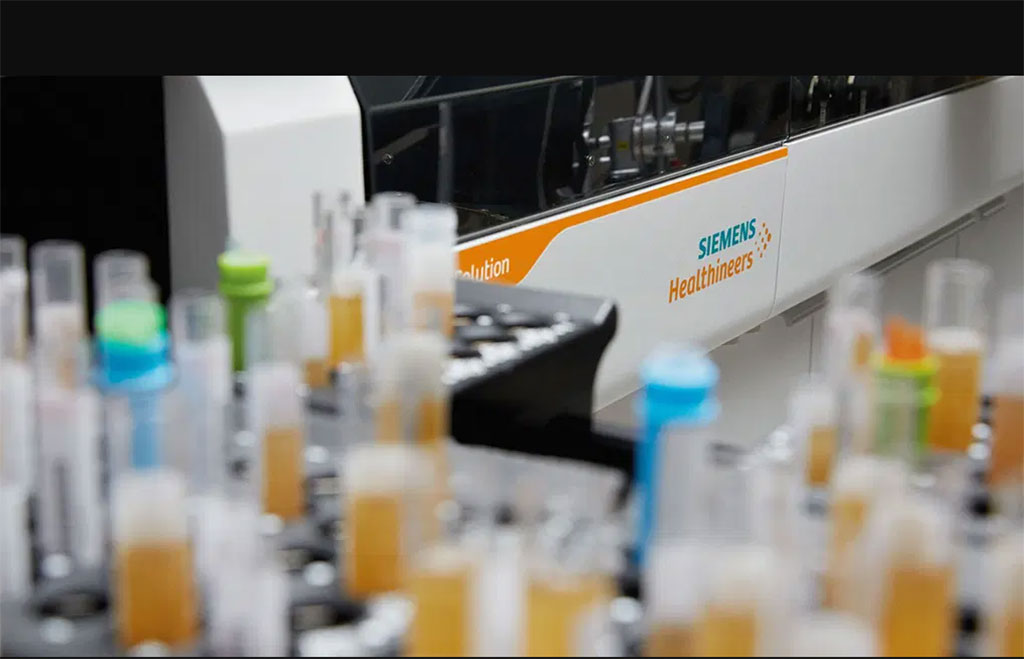
Siemens Healthineers (Erlangen, Germany) introduced new intelligent, integrated IVD solutions virtually at the XXIV IFCCEFLM European Congress of Clinical Chemistry and Laboratory Medicine (EuroMedLab Congress 2021).
EuroMedLab Congress 2021 was to be held as an in-presence meeting between 28th of November and 2nd of December in Germany but was postponed after the country was hit very hard by a fourth wave of COVID-19. However, those interested participated virtually in the Siemens EUROMEDLAB Experience that showcased its latest innovations. Siemens offered a virtual booth tour, held product demonstrations, and hosted expert presentations and on-demand webinars.
At its virtual booth, Siemens demonstrated its Atellica Solution comprising flexible, scalable, automation-ready immunoassay and chemistry analyzers with integrated automation. The company also highlighted of its extensive Atellica portfolio of tests that deliver accurate, clinically relevant results, including SARS-CoV-2 antibody tests, COVID-19 antigen assay, Atellica IM B·R·A·H·M·S PCT Assay for early sepsis risk assessment, and proven, true high-sensitivity cardiac troponin I assays for managing chest pain patients. Siemens highlighted the Atellica CI 1900 System which is being developed for the lower-to-mid-volume laboratories. It is planned to utilize the same menu, reagents, consumables, and detection technology as the Atellica Solution. Siemens also demonstrated how its Atellica Diagnostics IT can help labs unify data and optimize workflow with simple, open, and scalable solutions.
Siemens held virtual product demonstrations of its new Atellica Hematology Portfolio which pairs automation, intelligence, and extended parameters to streamline operations and support accurate clinical decision-making. The company presented the Sysmex CN-3000 and CN-6000 fully automated, mid-and high-volume coagulation analyzers which combine size, speed, intelligence, and flexibility.
In addition, Siemens virtually demonstrated its epoc blood analysis system, a handheld, wireless solution to enable comprehensive blood analysis testing at the patient’s side on a single room temperature test card, with results in less than a minute. Visitors to its virtual booth also saw the DCA Vantage Analyzer that helps monitor glycemic control and detect early kidney disease in environments ranging from the physician’s office to remote, point-of-care coordinated sites in hospitals and multisite practices. Among other products, Siemens virtually demonstrated rapid clinical decision-making with lab-comparable results from its broad POC blood gas portfolio, its high-sensitivity troponin I testing solution, and the new Sysmex CN-3000 and CN-6000 Systems for accelerating hemostasis workflows.
Related Links:
Siemens Healthineers






Latest Hematology News
- Next-Generation Hematology Platform Streamlines High-Complexity Lab Workflows
- Blood Eosinophil Count May Predict Cancer Immunotherapy Response and Toxicity
- Higher Ferritin Threshold May Improve Iron Deficiency Detection in Children
- Stem Cell Biomarkers May Guide Precision Treatment in Acute Myeloid Leukemia
- Advanced CBC-Derived Indices Integrated into Hematology Platforms
- Blood Test Enables Early Detection of Multiple Myeloma Relapse
- Single Assay Enables Rapid HLA and ABO Genotyping for Transplant Matching
- Prognostic Biomarker Identified in Diffuse Large B-Cell Lymphoma
- Routine Blood Test Parameters Link Anemia to Cancer Risk and Mortality
- Prognostic Tool Guides Personalized Treatment in Rare Blood Cancer
- New Platelet Function Assay Enables Monitoring of Antiplatelet Therapy
- Open Multi-Omics Platform Identifies Prognostic Subtypes in Blood Cancers
- AI-Powered Digital Workflow Standardizes Bone Marrow Aspirate Morphology
- Rapid Cartridge-Based Test Aims to Expand Access to Hemoglobin Disorder Diagnosis
- New Guidelines Aim to Improve AL Amyloidosis Diagnosis
- Automated Hemostasis System Helps Labs of All Sizes Optimize Workflow
Channels
Clinical Chemistry
view channel
FDA-Approved Test Identifies Low Risk of Large Esophageal Varices in Cirrhosis
Chronic liver disease contributes substantially to mortality, and clinicians routinely screen adults with compensated cirrhosis for varices to prevent bleeding. However, endoscopy is invasive and reso... Read more
Blood Protein Signature Diagnoses Pediatric IBD and Distinguishes Subtypes
Confirming pediatric inflammatory bowel disease (IBD) often requires imaging, endoscopy, and histopathology, prolonging time to diagnosis. Reliable, noninvasive blood tests remain an unmet need in routine... Read more
Molecular Diagnostics
view channel
Ultrasensitive ctDNA Assay Detects MRD in Breast, Colorectal, Renal Cancers
Minimal residual disease testing is increasingly used to guide adjuvant therapy and surveillance in solid tumors, but detecting very low levels of circulating tumor DNA remains challenging in routine practice.... Read more
Female-Specific RNA Biomarker May Help Explain Sex Differences in Immune Disease
Women show distinct susceptibility to infectious diseases and higher rates of autoimmune disorders, yet the molecular drivers remain unclear. This gap has limited sex-specific diagnostic and prognostic tools.... Read more

Immunology
view channel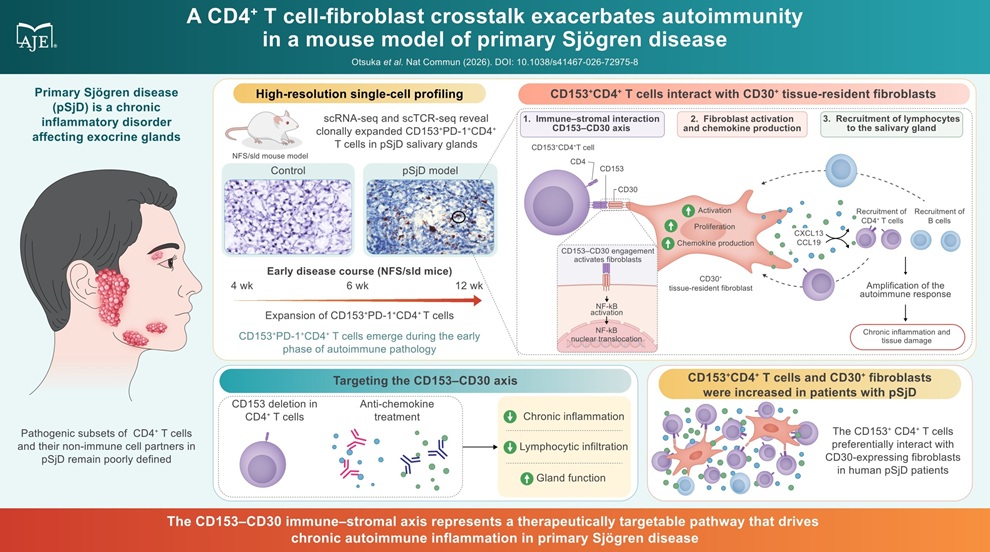
New Cellular Biomarkers Correlate with Disease Severity in Sjögren Disease
Autoimmune disorders arise when immune responses target self-antigens, driving chronic inflammation and long-term morbidity. In primary Sjögren disease, inflammation of salivary and lacrimal glands leads... Read more
Airway Immune Signature May Predict Tuberculosis Progression Risk
Tuberculosis remains difficult to predict and prevent, despite widespread exposure worldwide. An estimated quarter of the global population has been infected with Mycobacterium tuberculosis, yet only a... Read more
Microbiology
view channel
Machine Learning Reveals Consistent Gut Microbiome Patterns in Colorectal Cancer
Colorectal cancer has been repeatedly linked to alterations in the gut microbiome, yet findings have often varied across small, heterogeneous studies. Reproducibility has been limited by differing sequencing... Read more
Study Reveals Widespread Community Spread of Drug-Resistant Klebsiella
Multidrug-resistant Klebsiella pneumoniae is an escalating community health concern, driving recurrent urinary tract infections in older adults and complicating first-line antibiotic therapy.... Read more
Stronger Laboratory Services Support Timely Melioidosis Diagnosis Amid Global Spread
Melioidosis, a potentially fatal infection caused by Burkholderia pseudomallei, remains difficult to recognize because its symptoms can mimic tuberculosis and other illnesses. The disease is considered... Read more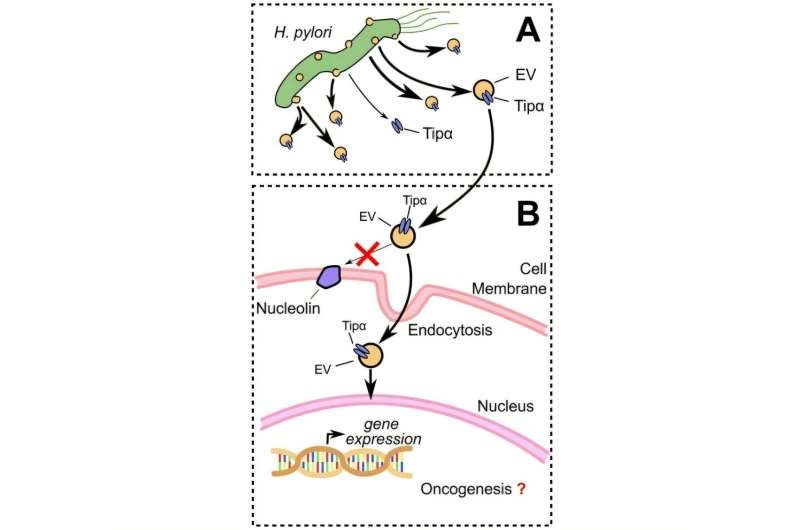
Extracellular Vesicle Biomarker May Enable Noninvasive Monitoring of H. pylori
Helicobacter pylori infects an estimated 43.9% of the global population, affecting approximately 4.4 billion people worldwide. In many regions, including Africa, Eastern Europe, and Southeast Asia, prevalence... Read morePathology
view channel
Uncertainty-Aware AI Tool Improves Digital Pathology for Cancer Subtyping
Reliable histologic subtyping guides therapy selection in oncology, yet diagnostic workflows grow more complex as whole-slide imaging and artificial intelligence (AI) expand. A persistent obstacle to clinical... Read more
Study Highlights Biomarker Testing Delays in Lung Cancer Care
Timely biomarker results are critical to match lung cancer patients with targeted therapies or immunotherapies, yet many clinical pathways still delay testing after biopsy. Ordering responsibility, reimbursement... Read more
Technology
view channel
AI Platform Links Biomarker Results to Cancer Clinical Trials and Guidelines
Oncology teams must manage growing volumes of genomic data, rapidly evolving clinical trial options, and frequently updated care guidelines, all within tight clinic schedules. Translating complex tumor... Read more
Agentic AI Platform Supports Genomic Decision-Making in Oncology
Oncology care teams increasingly face the challenge of managing complex molecular diagnostics, evolving treatment options, and extensive electronic health record documentation. Translating multimodal data... Read more

Industry
view channel
Project Aims to Develop First Single-Cell Assay for ADC Therapies
Antibody-drug conjugates are expanding rapidly in oncology, intensifying the need for biomarker strategies that capture tumor heterogeneity at cellular resolution. Single-cell profiling can delineate cellular... Read more