Tumor Microenvironment Marker Linked to Worse Survival in Solid Tumors
Posted on 18 May 2026
Risk stratification across solid tumors remains difficult because outcomes can vary widely among patients with the same tumor type. Molecular features detectable in routinely profiled specimens could help clinicians and laboratories refine prognostic assessment.
One such feature is tumor-infiltrating clonal hematopoiesis (TI-CH), which reflects the presence of somatically mutated hematopoietic stem cells within the tumor microenvironment. While clonal hematopoiesis is an established prognostic factor in hematologic malignancies, its clinical relevance in solid tumors has remained poorly understood. A new study now shows that TI-CH is associated with worse survival in patients with solid tumors.
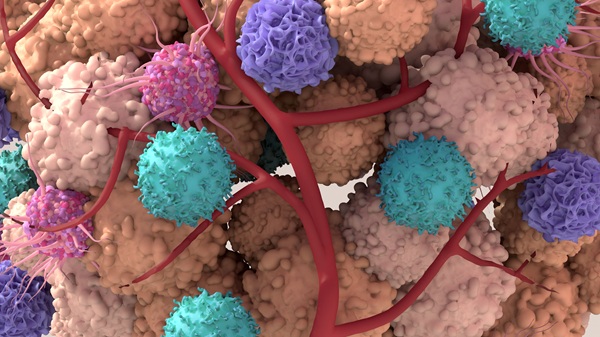
Investigators at Chungbuk National University (Cheongju, South Korea) evaluated TI-CH as a prognostic biomarker across solid tumors. TI-CH was defined as somatic variants in 74 driver genes identified in tumor tissue. Using whole-genome sequencing, the team assessed the presence of TI-CH and examined its relationship with clinical factors and overall survival.
In a retrospective cohort including 10,571 patients with solid tumors, the prevalence of TI‑CH was the primary outcome. The study further assessed associations between TI‑CH, patient age, cytotoxic chemotherapy exposure, and survival. Gene‑specific and disease‑specific distributions were also characterized.
TI‑CH was present in 1,943 of 10,571 patients (18.38%). The highest counts occurred among patients with TET2 variants (212 patients) and among those with endometrial cancer (251 patients). TI‑CH was more common with older age and with cytotoxic chemotherapy, with odds ratios (ORs) of 1.15 and 1.24, respectively.
The presence of TI‑CH correlated with worse pan‑cancer overall survival (hazard ratio [HR], 1.13), with a particularly strong association in breast cancer (HR, 1.95). At the gene level, worse pan‑cancer survival was significantly associated with GATA2 variants (HR, 3.00), while worse breast cancer survival was significantly associated with TET2 variants (HR, 2.92). These data indicate that TI‑CH status and its genetic drivers convey prognostic information in patients with solid tumors.
The study was published online on May 7, 2026, in JAMA Oncology. The authors underscored the clinical potential of TI‑CH as a prognostic biomarker in patients with solid tumors. The analysis defined TI‑CH from tumor tissue using whole‑genome sequencing across 74 driver genes.
Related Links
Chungbuk National University