Gene Signature Shows Promise for Depression Biomarker Testing
Posted on 13 May 2026
Major depressive disorder (MDD) exerts systemic effects that extend beyond mental health, reflecting interplay between the nervous and immune systems. Peripheral inflammation has been associated with central symptoms and with vascular and inflammatory comorbidities. Researchers now report broad dysregulation of synapse-related genes in circulating immune cells from people with depression.
At the University of São Paulo Medical School (FM-USP) in Brazil, investigators performed systems-level transcriptomic analysis of peripheral leukocytes to delineate neuroimmune gene networks. The approach examined synaptic pathways that are active in blood and may mirror processes relevant to neuronal communication. Findings were published in Scientific Reports.
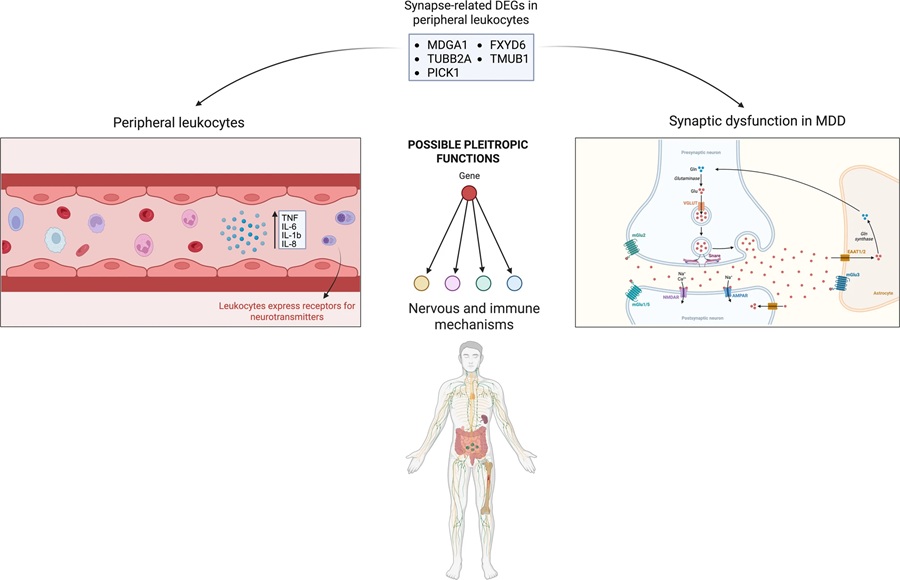
Using more than 3,000 blood samples from public repositories in the United States, Germany, and France, the team identified gene-expression changes in white blood cells from patients with MDD. In total, 1,383 genes were altered, 73 of which were classically linked to synapses, including neurotransmission and the formation of neural connections. An 18‑gene set consistently differentiated depressed patients from individuals without the disorder.
The mapped network also intersected with conditions frequently seen alongside depression, including bipolar disorder, psychoses, anxiety, hypertension, arterial and inflammatory diseases, and psoriasis; associations were also noted with gastrointestinal symptoms, erectile dysfunction, and coronavirus-related complications. The authors further note that the link between peripheral inflammation and central symptoms could inform inflammation‑targeted interventions.
"We mapped this network of genes that drives the interaction between the immune and nervous systems. Depression is a systemic phenomenon, meaning it spreads throughout the entire body. And the immune system is one of the systems that decentralizes this condition, spreading it beyond the central nervous system," says Otávio Cabral-Marques, a professor at FM-USP and coordinator of the research. "For that reason, it's not uncommon for a person with depression to exhibit other symptoms, such as skin inflammation or loss of appetite, for example."
"It's a data science study that still needs to be biologically confirmed, but it opens up interesting possibilities for the future development of a panel to identify genes present in immune system cells circulating in the blood that are involved in depression. Since blood is more accessible than brain tissue, the identified genes serve as biological markers of the presence and severity of depression," says Anny Silva Adri, who conducted the study as part of her doctoral research.
Related Links
University of São Paulo Medical School