Dual-Function Wound Patch Combines Infection Sensing and Treatment
Posted on 25 Mar 2026
Chronic wounds require continuous, adaptive care and place a heavy burden on health systems. Clinicians need dressings that can detect early infection while providing therapy without frequent changes. Existing “smart” dressings typically monitor or medicate, but integrating both functions in one device has been challenging. Researchers have now developed a dual‑function wound patch that aims to simplify monitoring and treatment in a single, scalable platform.
Researchers at RMIT University (Melbourne, Australia) have created a hydrogel‑based smart wound dressing that embeds carbon dots, which are biocompatible carbon nanoparticles, directly into the material. The platform is designed to sense the wound state and deliver therapy using the same integrated system. The approach seeks to reduce design complexity compared with devices that rely on separate, expensive sensing components.
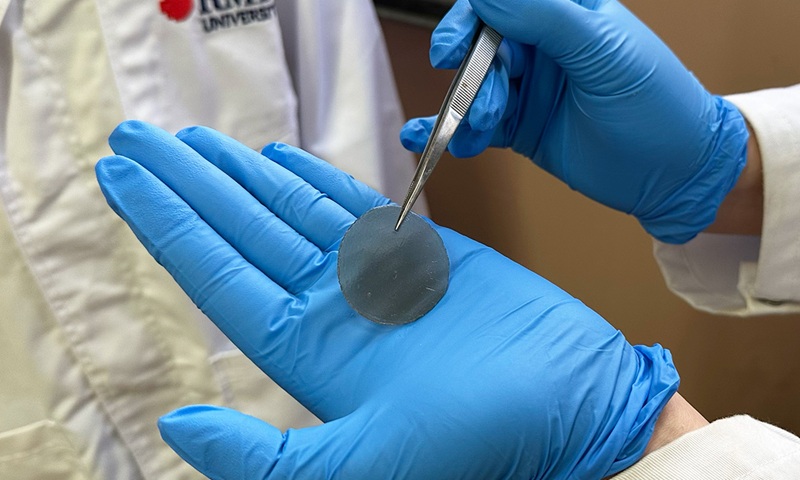
The dressing leverages carbon dots to image and sense changes in the wound microenvironment while acting as therapeutic artificial enzymes, or nanozymes, to counter inflammation. It changes color in response to pH shifts associated with infection, enabling readout with portable smart devices. When infection‑related signals are detected, the hydrogel automatically releases therapeutic nanozymes, and clinicians or patients can also trigger release manually by applying gentle pressure to the patch.
Initial studies were conducted at lab scale, with validation in appropriate in vivo wound models identified as a key next step. The team is seeking industry partnerships to refine the design and scale manufacturing for clinical translation. According to the researchers, the patch’s dual function could support more timely and effective intervention by enabling responsive detection and treatment in one dressing.
The work drew on RMIT’s Micro Nano Research Facility and its Microscopy and Microanalysis Facility. The study, titled “Carbon-dot nanozyme-empowered responsive hydrogels for smart wound dressing,” was published in Chemical Engineering Science. The researchers report that the streamlined design is intended to address barriers that have limited commercialization of smart wound dressings.
“Many smart wound dressings developed in research laboratories are difficult to translate into real clinical products because they rely on complex designs or expensive sensing systems,” said Dr Haiyan Li, Senior Lecturer at RMIT’s School of Engineering. “Our approach integrates sensing and dual-mode therapeutic functions into a single dressing with a simple, streamlined design, which helps address some of the key challenges that have previously limited commercial translation.”
“Ultimately, our goal is to translate this research into practical smart wound dressings and integrate this smart platform into a digital health ecosystem, where the data from the patch is collected, analysed, and used to drive clinical decisions to advance chronic wound management,” said Dr Lei Bao, Senior Lecturer at RMIT’s School of Engineering.
Related Links
RMIT University