Optical Sensor to Detect Vitamin B12 Deficiency
By LabMedica International staff writers
Posted on 26 Oct 2016
Researchers have developed the first optical sensor that can detect vitamin B12 in diluted human blood – and a first step towards a low-cost, portable, broadscale B12 deficiency test that would overcome limitations of current methods for monitoring levels in high-risk individuals and populations.Posted on 26 Oct 2016
The device, developed by scientists at the University of Adelaide (Adelaide, Australia), was presented October 17, 2016, at the inaugural “SPIE BioPhotonics Australasia” international conference in Adelaide.
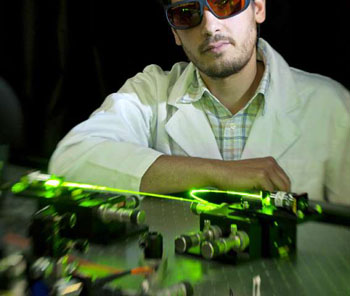
Image: Dr. Georgios Tsiminis in his photonics laboratory (Photo courtesy of the University of Adelaide).
“Vitamin B12 deficiency has been shown to be a potential modifiable risk factor for dementia and Alzheimer’s disease and is associated with cognitive decline,” said Dr. Georgios Tsiminis, research fellow at the University of Adelaide, “Older adults are particularly at risk of B12 deficiency due to age-related reduction in absorbing vitamin B12 received through their diet.
Currently at proof-of-concept stage, the sensor demonstrates feasibility of testing for vitamin B12 in human blood serum without the need for a full laboratory test. It could provide point-of-care B12 tracking in, for example, healthy ageing adults, enabling early treatment intervention as soon as deficiency is detected.
“This is the first time a rapid technique based on optical spectroscopy has been shown to be able to detect vitamin B12 in human blood serum. We believe this is a very promising first step towards achieving this goal,” said Dr. Tsiminis.
Currently, routine B12 testing is not being carried out due to time and cost limitations. “Our method provides a realistic basis for a system that is portable, cost-effective, and affords rapid results, along the lines of the pin-prick test for diabetes,” said Dr. Tsiminis. The device uses Raman spectroscopy to produce the vitamin B12 optical fingerprint, takes under 1 minute to measure B12 in human blood, and requires minimal preparation.
Related Links:
University of Adelaide




Platinum Member

Automated Coagulation Analyzer
Hemolumi H6
Gold Member

Nucleic Acid Extractor System
NEOS-96 XT

Immunofluorescence Analyzer
IFA System

POC Immunoassay Analyzer
Procise DX