Computer Algorithms Automatically Detect Malaria in Stained Blood Smears
By LabMedica International staff writers
Posted on 11 Aug 2015
An Israeli startup company has developed a computerized platform that detects anomalies in stained blood cell samples—such as those infected by the malaria parasite—faster and more accurately than the human eye.Posted on 11 Aug 2015
Sight Diagnostics or SightDx (Jerusalem, Israel) was initiated in 2011 with six million USD obtained from crowd funding and several innovation investors. This funding was used by a team comprising biologists, software experts, and engineers to develop vision-based algorithms to scan and analyze blood. Analysis was based on visible characteristics such as size, shape, fluorescence intensity, and morphology.
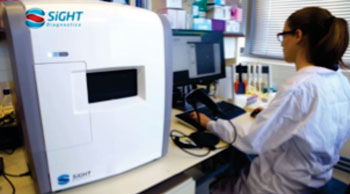
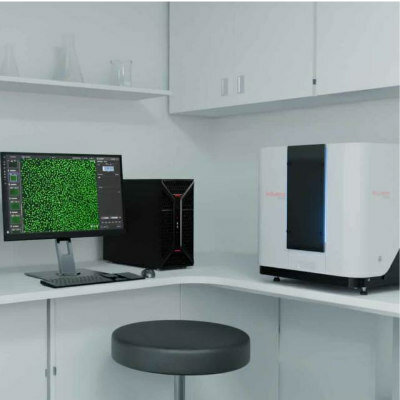
Image: The Parasight platform: computer vision technology scans stained blood samples under a fluorescent microscope and detects the presence of malaria parasites in blood cells (Photo courtesy of Sight Diagnostics).
The algorithms were set to function within SightDx's Parasight platform, a high throughput instrument suitable for batch (up to 30 samples) and asynchronous loading. It was designed to be fully automated, simple to operate, and optimized for rapid testing and analysis.
The Parasight platform consists of a scanning and analyzing device as well as a sample preparation kit containing custom-built disposable plastic cartridges to create an efficient, standardized, and uniform version of the “thin blood smear”, that is easy to prepare within 15 seconds. These cartridges require only a small drop of blood that can be obtained with a finger-stick or from a tube. Parasight reports, in under three minutes, the diagnosis (Positive/Negative), parasitemia count (number of parasites per microliter), and speciation (determination of the specific species of malaria). Results are automatically transferred to the laboratory information system.
Trials using Parasight were conducted in several hospitals in India, South Africa, and France. Results showed that it was 99% accurate in sensitivity and 98% in specificity as compared to results of about 95% for human microscopists.
“Essentially, you try to do what the human eye does,” said Joseph Joel Pollak, CEO of Sight Diagnostics. “Computer vision-based devices have a camera, and the camera takes pictures of the blood. Then, algorithms analyze the scene.”
Related Links:
Sight Diagnostics




Platinum Member

Automated Coagulation Analyzer
Hemolumi H6

Gold Member

Flocked Fiber Swabs
Puritan® Patented HydraFlock®

LAIR2 Antibody Pair Set
LAIR2 Antibody Pair [Biotin]

Immunofluorescence Analyzer
IFA System