Spectral Flow Cytometry Assay Enhances MRD Detection in Multiple Myeloma
Posted on 23 Jul 2026
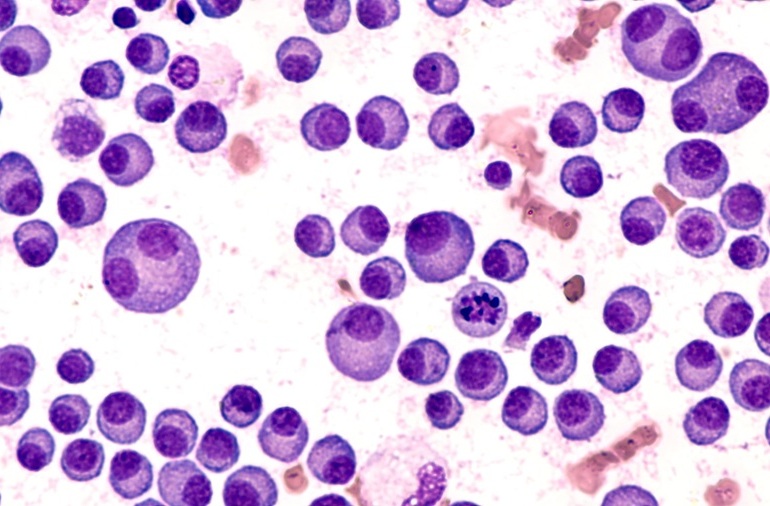
imal residual disease (MRD) monitoring is pivotal in multiple myeloma, where persistent malignant plasma cells drive relapse risk and help guide therapy decisions. In the United States, approximately 202,000 people live with the disease, with an estimated 36,000 new cases expected in 2026. Conventional flow cytometry can miss very small neoplastic populations and often requires larger bone marrow specimen volumes. A newly launched test now applies spectral flow cytometry to provide deeper MRD profiling with higher sensitivity while using less specimen volume.
ARUP Laboratories (Salt Lake City, UT, USA) has introduced ARUP CLARISPECT Multiple Myeloma MRD by Spectral Flow Cytometry, launched July 20, 2026. The assay is designed to characterize small neoplastic plasma cell populations with greater confidence and sensitivity than conventional flow cytometry. ARUP is the first large U.S. reference laboratory to bring spectral flow technology into clinical use.
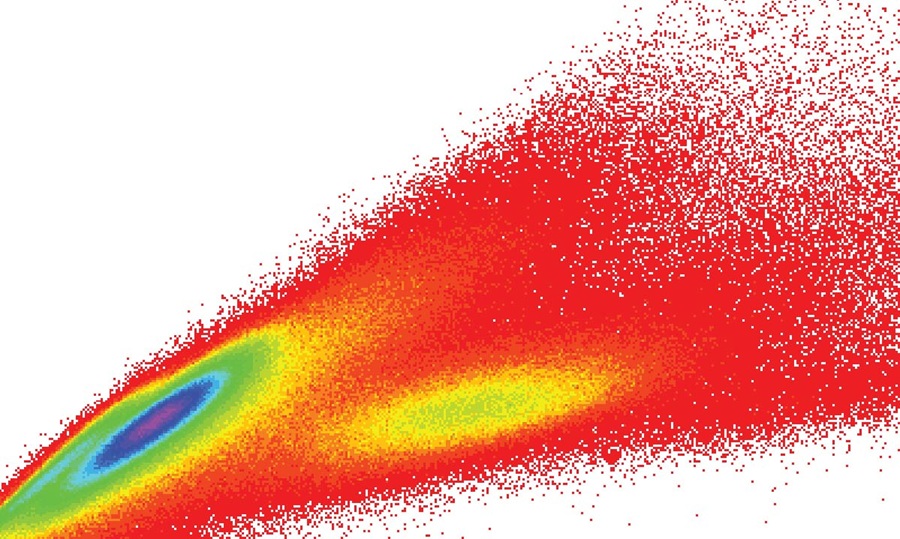
Spectral flow cytometry captures emission data across the full spectrum of light, enabling simultaneous interrogation of high numbers of markers. While the platform can evaluate more than 40 antigens in a single run, the myeloma assay assesses 18 markers for minimal residual disease detection. Consolidating all targets into one tube reduces specimen requirements, which is critical for difficult‑to‑obtain bone marrow specimens.
CLARISPECT delivers deep minimal residual disease profiling for multiple myeloma. It can identify extremely low levels of residual disease, detecting as few as 14 neoplastic cells in a population of five million analyzed cells with 95% confidence. Minimal residual disease status is closely associated with clinical outcomes and is used to evaluate treatment efficacy, prognostication, and risk stratification.
ARUP reports that it will expand this spectral flow cytometry MRD testing suite. The laboratory cites large testing volumes with high‑complexity and rare disease cases as supporting validation breadth and interpretation quality. The offering reflects ongoing hematopathology test development at the organization.
“We are harnessing a technology that’s relatively new in the diagnostic space,” said Madhu Menon, MD, PhD, FCAP, FASCP, head of clinical operations for Hematopathology at ARUP. “By offering a superior technique with higher sensitivity, we will directly impact a subset of patients who otherwise would not have been identified as MRD positive.”
“The number of antigens we can bring to bear will facilitate easier interpretation and, by extension, greatly increase our sensitivity,” said David Ng, MD, FCAP, ARUP medical director of Hematopathology, Hematologic Flow Cytometry, and Applied Artificial Intelligence and Bioinformatics.
Related Links
ARUP Laboratories