Simple Urine Home Test Kit Could Detect Early-Stage Breast Cancer
Posted on 25 Mar 2026
Breast cancer is the most commonly diagnosed cancer among women globally and remains a leading cause of cancer-related deaths in more than 100 countries. Current diagnostic pathways rely on mammography, magnetic resonance imaging (MRI), and biopsy, which can be invasive or difficult to access. There is growing interest in noninvasive tools that detect early disease using easily collected specimens. Researchers now report progress toward a urine-based lateral flow approach intended to flag early biochemical signatures of breast cancer.
At Aberystwyth University (Aberystwyth, Wales, UK), scientists are developing a simple, noninvasive home test kit in the form of a prototype lateral flow device—similar to a pregnancy or COVID-19 test—that detects early biochemical signs of breast cancer from a single urine sample. The initiative targets early detection to support faster diagnosis and reduce dependence on invasive procedures. The concept aims to provide an accessible format suitable for use outside clinical settings.
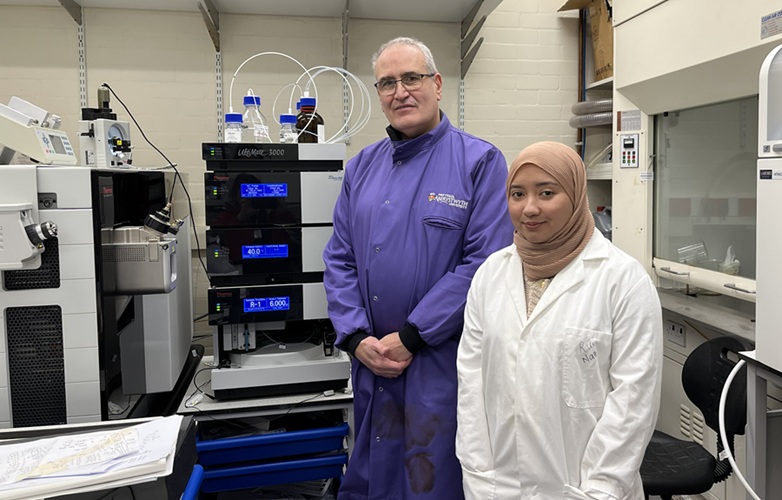
The approach focuses on metabolic changes associated with breast cancer that are excreted in urine. By identifying a distinct biochemical signature, the device is intended to provide an indication of early-stage disease. The research team is translating laboratory findings into a point-of-need format using lateral flow technology to enable straightforward readouts.
The work forms part of a new clinical research program at Aberystwyth University that links biomarker discovery to prototype development. The group is collaborating with National Health Service colleagues to accelerate movement from proof-of-concept to practical tools. The project is supported through the Welsh Government’s SMART Award program and co-sponsored by Dynamic Extractions Ltd, whose separation-technology expertise complements the university’s analytical and clinical capabilities.
In addition to breast cancer, the team is exploring urine-based diagnostics for endometriosis and polycystic ovary syndrome (PCOS) to help address diagnostic delays in women’s health. The translational pathway is designed to shorten the interval between discovery, validation, and real-world deployment, in partnership with health boards.
“Our work is revealing a distinct biochemical ‘signature’ associated with the earliest stages of breast cancer—one that can be detected in a simple urine sample. By translating these findings into a lateral flow test, we hope to create a diagnostic tool that is affordable, easy to use at home, and capable of detecting cancer earlier than many current methods. Early diagnosis saves lives, and our aim is to make that crucial first step accessible to as many women as possible,” said Professor Luis Mur, who leads the research at Aberystwyth University.
Related Links
Aberystwyth University