Plasma Protein Signature Predicts Lung Cancer Risk Up to Five Years Ahead
Posted on 05 Jun 2026
Lung cancer remains a leading cause of cancer death, and many cases are detected only after symptoms appear. Current screening programs largely target people with a history of smoking, leaving other at-risk groups underserved. Environmental exposures such as air pollution may also promote tumor development in predisposed tissues, compounding early detection challenges. A new study shows that a blood-based protein signature can identify individuals at elevated risk of lung cancer up to five years before diagnosis.
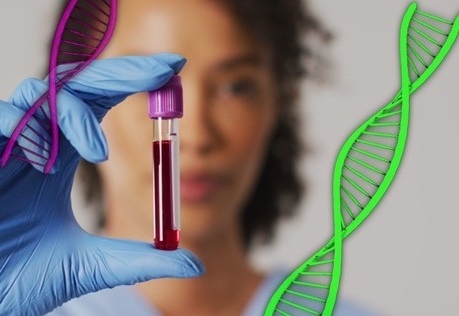
Researchers at the Francis Crick Institute (London,UK) identified a 14-protein plasma signature that, combined with age, smoking status, and prior lung disease, predicted future lung cancer within five years. Developed using machine learning, the signature was derived from blood plasma protein measurements and then validated across multiple cohorts. The approach is intended to move risk assessment beyond age and lifestyle factors toward measurable, biology-based indicators.
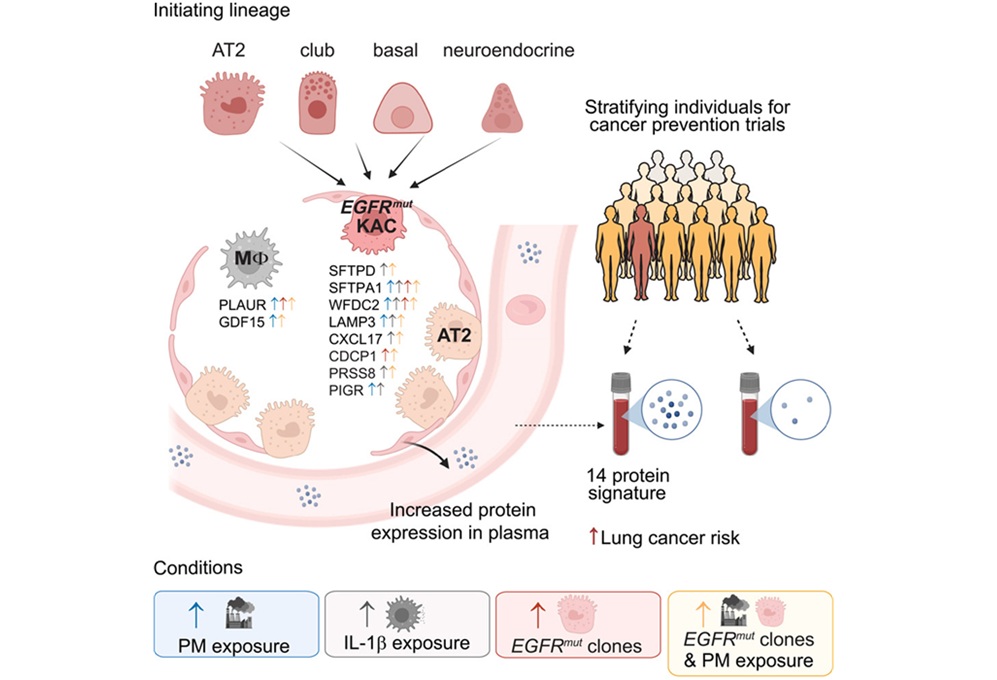
Across analyses of patients and animal models, the signature appeared to reflect a pre-tumor inflammatory state in the lung rather than proteins shed directly by a nascent tumor. Pollution-related activation of interleukin-1 beta (IL-1β) was associated with increases in proteins within the signature and expansion of an adaptive, injury-response cell state known as “KAC cells,” which can become malignant when mutations are present. The signature was also higher in people who later developed idiopathic pulmonary fibrosis or chronic obstructive pulmonary disease (COPD), suggesting a shared pre-disease inflammatory milieu.
Study development used plasma data from more than 48,000 UK Biobank participants, linked to cancer registry records to identify subsequent lung cancer. The 14-protein signature was validated in eight datasets from four continents, including a cohort of non-smokers, and was consistently higher among individuals who later developed lung cancer. Re-analysis of 4,651 participants in Novartis’s 2017 CANTOS trial found that people with a high baseline signature had their lung cancer risk nearly halved when treated with the IL-1β blocker canakinumab, yielding a number needed to treat of 55.
The findings were published in Cell on June 4, 2026. The work involved the Francis Crick Institute and University College London (UCL), with support from the National Institute for Health and Care Research UCLH Biomedical Research Centre, and leveraged UK Biobank data. In mouse studies, blocking IL-1β during pollution exposure reduced KAC cells and slowed early tumor development, indicating that IL-1β–targeted strategies may be most effective when this inflammatory signal is present.
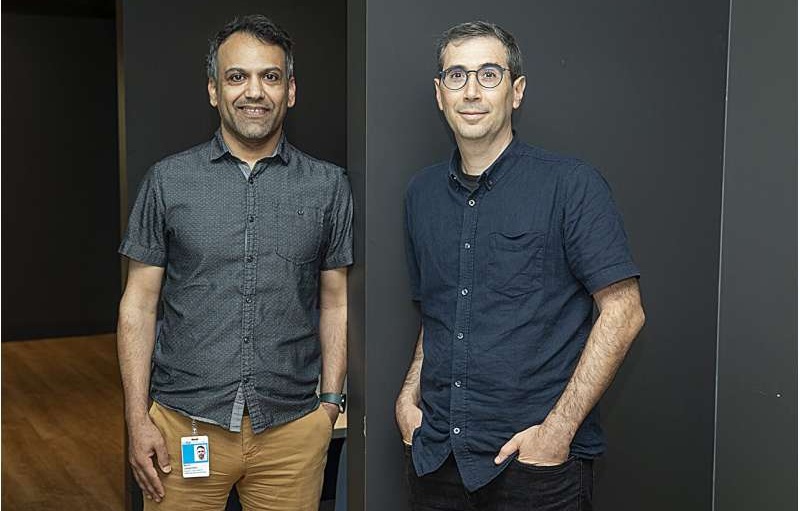
“We used machine learning on plasma data from over 48,000 people to identify the 14-protein signature, and it has been incredible to validate it across eight datasets with more than 80 collaborators on four continents. Working hand-in-hand with scientists in the lab to understand the biology in mouse models, we've shown that the signature reflects an altered inflammatory lung environment before cancer takes hold. It's a proof of concept that, one day, we could use this signature to offer preventive treatment to people at risk of lung cancer,” said Tej Pandya, Clinical Ph.D. student at UCL and visiting scientist at the Francis Crick Institute.
“By revealing the earliest warning signs of cancer, this research brings us closer to intervening sooner and potentially stopping the disease before it starts. In doing so, it could help spare people and their loved ones from the impact of a cancer diagnosis, treatment, and everything that follows, allowing them instead to focus on the moments that matter most,” said Hayley Brown, Research Information Manager at Cancer Research UK.
Related Links
The Francis Crick Institute