AI Pathology Model Predicts Immunotherapy Response in Lung Cancer
Posted on 22 Apr 2026
Clinicians face persistent challenges identifying which patients with metastatic non-small cell lung cancer will benefit from immunotherapy, even as these agents transform oncology care. Current stratification relies heavily on PD-L1 expression, which can have only modest predictive value and leave treatment decisions uncertain. More informative, slide-based biomarkers are needed to guide therapy selection and avoid ineffective regimens. New findings demonstrate that a machine learning platform can improve prediction of immunotherapy outcomes in this population.
Researchers at the University of Texas MD Anderson Cancer Center (Houston, TX, USA) developed Path-IO, a deep-learning pathomics platform designed to predict responses to immunotherapy in metastatic non-small cell lung cancer (NSCLC). The model analyzes routinely collected pathology slides to detect intratumoral structures known as niches and other complex tissue features associated with treatment response. It then stratifies patients into high- and low-risk groups for disease progression following immunotherapy.
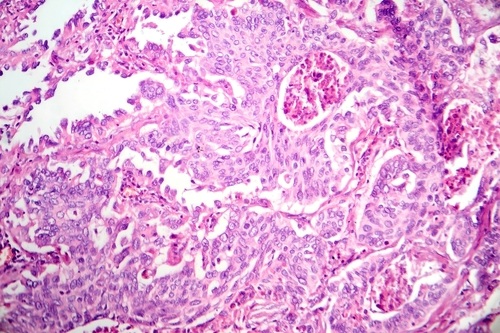
Unlike “black box” artificial intelligence, Path-IO focuses on well-established tissue features and generates explainable outputs linked to known biology. By quantifying patterns that are difficult for humans to consistently identify, the platform provides interpretable risk assessments that align with recognized determinants of response. Investigators also combined its pathology-based predictions with radiomics and clinical data to further strengthen prognostic performance.
Using a historical cohort from MD Anderson, Path-IO separated patients into high- and low-risk categories, with the high-risk group showing approximately double the risk of death or disease progression compared with the low-risk group. External validation across several datasets encompassed more than 1,000 patients from multiple institutions and countries. Across all datasets, Path-IO significantly outperformed PD-L1 testing, which in some validation groups was no better than chance.
Details were presented at the American Association for Cancer Research (AACR) Annual Meeting 2026. The team is preparing for prospective clinical validation and expanding cohorts to include more diverse patient groups. Future development described by the investigators includes integrating multimodal inputs—such as radiomics, computed tomography imaging, genomic factors and other clinical variables—toward a comprehensive digital twin framework.
“There are a number of AI-based approaches that have shown potential in recent years, but Path-IO really stands apart because we designed it from the outset for clinical translation. For that to happen, a model has to make explainable decisions based on known factors and do it in a way that holds up across data sets. What we show here is, not only can Path-IO do that, but it can do it using data from slides that are already routinely gathered,” said Rukhmini Bandyopadhyay, Ph.D., postdoctoral fellow in the lab of Jia Wu, Ph.D., at The University of Texas MD Anderson Cancer Center.
“To our knowledge, this is the most rigorously validated deep-learning pathomics framework to date. But we’re really just getting started. As we continue to integrate more data streams into the model, it will improve and become more specific in its predictive abilities, hopefully becoming a major asset for clinicians who are helping patients make important decisions about their treatment options,” said Bandyopadhyay.
Related Links
University of Texas MD Anderson Cancer Center