AI-Based Pathology Model Guides Chemotherapy Decisions in Breast Cancer
Posted on 01 Apr 2026
Selecting adjuvant chemotherapy for early-stage breast cancer remains a difficult decision because only a subset benefits and many undergo toxicity without gain. Genomic assays can help but are costly, take weeks, and are inaccessible in many settings. Clinicians need faster, widely deployable tools that preserve decision accuracy. Researchers now present an artificial intelligence approach that predicts both recurrence risk and the likelihood of chemotherapy benefit using routine pathology slides.
Technion—Israel Institute of Technology, working with collaborators in the United States and Europe, developed a deep learning model that estimates recurrence risk and predicts chemotherapy benefit directly from histopathology. The approach was recently published in The Lancet Oncology and presented at the European Society for Medical Oncology (ESMO) conference. It is described as the first artificial intelligence model of its kind to be validated in a large, randomized clinical trial.
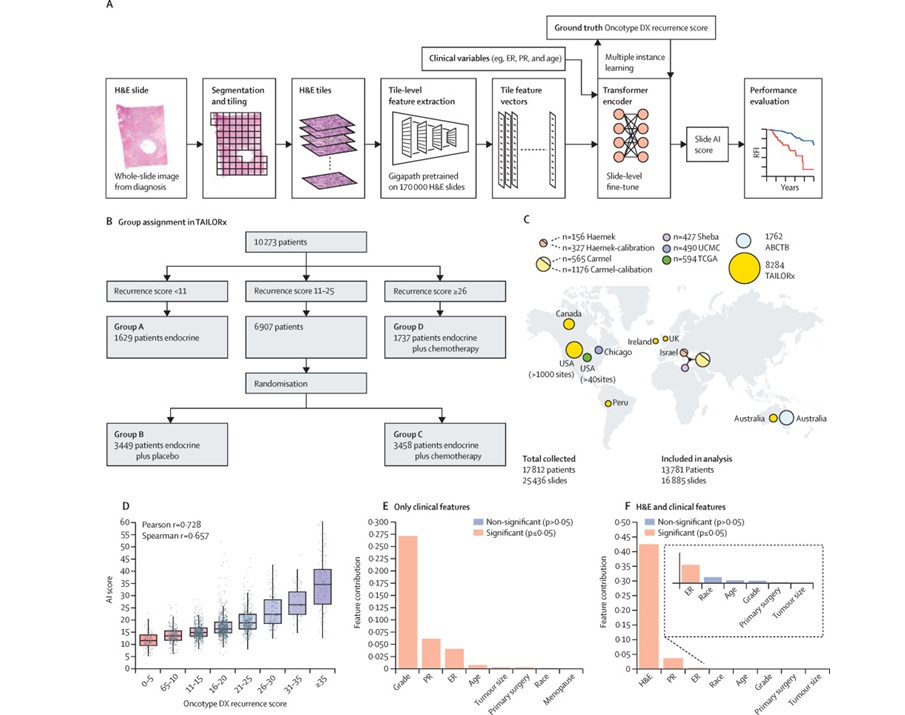
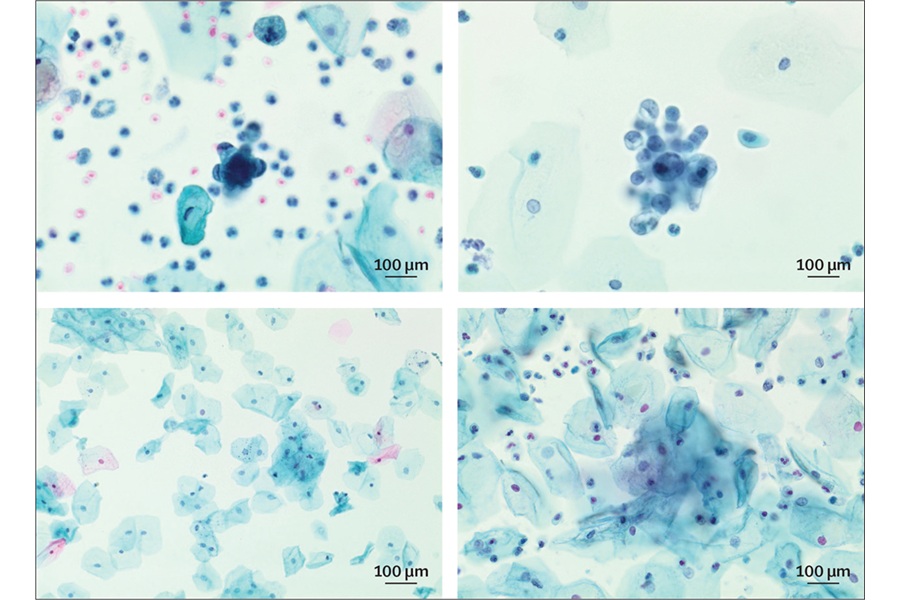
The system analyzes high‑resolution digital images of tumor tissue generated during standard pathology workflows. Using deep learning, it evaluates multiple regions of the tumor and its microenvironment to identify visual patterns associated with cancer behavior, including features linked to treatment sensitivity or resistance. The output is a numerical score produced within minutes that supports shared decision‑making. Unlike genomic tests, the assessment requires no additional tissue, laboratory processing, or waiting period.
Validation leveraged rare access to tissue samples and clinical data from TAILORx, one of the largest randomized breast cancer trials in which more than 10,000 patients were assigned to receive chemotherapy or not. This design enabled assessment of whether the model predicts treatment benefit rather than recurrence risk alone. The study is reported as a multicenter model development and validation study, with additional testing on thousands of patients from hospitals in Israel, the United States, and Australia, including Carmel, Emek, and Sheba Medical Centers.
The work was led at Technion with collaborating clinicians and pathologists from Dana‑Farber Cancer Institute, Mount Sinai Medical Center, the University of Chicago Medical Center, and IPATIMUP Medical Center in Portugal. The study is published in The Lancet Oncology (2026). Each year, approximately 2.3 million people worldwide are diagnosed with breast cancer, underscoring the need for decision tools that can be deployed broadly.
According to the investigators, next steps include advancing clinical implementation in Israel and preparing clinical trials in Brazil and India. The team is also working to further improve the model and extend it to additional treatments and cancer types in which aggressive therapy decisions are made under uncertainty.
"This is the first AI model shown to predict treatment benefit in breast cancer directly from pathology samples," said Professor Dvir Aran of the Technion's Faculty of Biology, a co-leader of the study. "In developing countries, where genomic testing is largely unavailable, this tool could dramatically expand access to personalized cancer care. In high-income countries, it could reduce costs, shorten diagnosis time, and improve decision accuracy."
Related Links
Technion - Isreal Institute of Technology