Key Genes Identified for Leukemia Development
By LabMedica International staff writers
Posted on 25 Jan 2016
Human leukemia is characterized by the prevalence of recurrent chromosomal translocations, resulting in the generation of chimeric fusion proteins with aberrant oncogenic activities. Posted on 25 Jan 2016
Two genes have been identified that are critical to the development of acute myeloid leukemia (AML), the leukemia with the highest mortality rate while drugs that selectively block these genes could be highly effective in treating this type of leukemia.
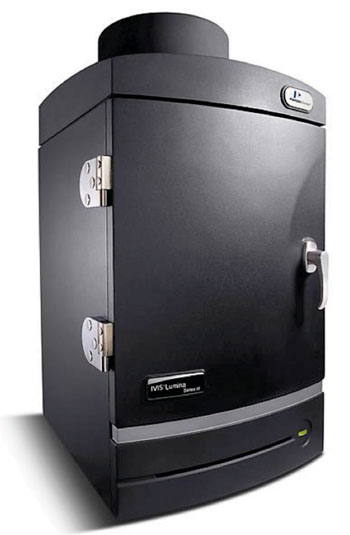
Image: The IVIS Lumina Series III Preclinical in vivo Imaging System (Photo courtesy of Perkin Elmer).
Scientists at King's College London (UK) and their colleagues used genetic tools to silence the two genes, as well as drugs to block their activity, in mice with AML. The genes Lysine (K)-Specific Demethylase 4C (KDM4C) and Protein Arginine Methyltransferase 1 (PRMT1) ordinarily play a role in translating the genetic information in DNA into healthy cell functions. The team have shown, however, that during leukemia development these enzymes are recruited to enable the transformation of blood cells into cancer cells. Crucially, these genes work in tandem and if either is not fully active, leukemia is not able to develop.
Bioluminescence images were acquired using IVIS Lumina II (Caliper, Perkin Elmer; Waltham, MA, USA). When either gene was silenced, the majority of the mice were still alive at the end of the 60-day experiment, whereas without treatment, the majority died in less than 40 days. By blocking either gene's activity with drugs, which is more relevant to how human patients would be treated; the survival times for mice with AML were also significantly extended. Blocking PRMT1 meant half the mice were still alive after 48 days, compared to 36 days for mice who did not receive treatment. Strikingly, leukemia development was even more effectively suppressed in mice with AML by using a drug to block KDM4C activity instead. All of the mice treated with a KDM4C blocker were still alive at the end of the experiments while the group without treatment succumbed to the disease.
Chi Wai Eric So, PhD, a professor of Leukemia Biology, who led the study, said, “The demonstration of how critical these genes are to cancer transformation and treatment could be highly significant for the design of new drugs. Further work is needed to develop and refine drugs to maximize their effects and so that they are suitable for patients. Clinical trials will then be needed to see how leukemia patients respond to these drugs and how use of them can be optimized.” The study was published on January 11, 2016, in the journal Cancer Cell.
Related Links:
King's College London
Perkin Elmer




Platinum Member

Automated Coagulation Analyzer
Hemolumi H6
Gold Member

NEW PRODUCT : SILICONE WASHING MACHINE TRAY COVER WITH VICOLAB SILICONE NET VICOLAB®
REGISTRED 682.9
Platinum Member
Integrated Biochemical & Immunological System
Biolumi CX Solution X10+C10

Automatic CLIA Analyzer
Shine i6000