Missing Link Found for Early Changes in Alzheimer's Pathology
By LabMedica International staff writers
Posted on 11 Aug 2015
The precursor of the amyloid beta (Aß) peptide acts at the earliest stage of Alzheimer's disease to initiate a range of abnormalities leading to the loss of groups of neurons critical for memory formation.Posted on 11 Aug 2015
The β-secretase-cleaved carboxyl-terminal fragment (βCTF) is formed during endocytosis, the process by which cells absorb nutrients and sample various materials from the outside environment, and is strongly implicated in Alzheimer’s disease (AD).
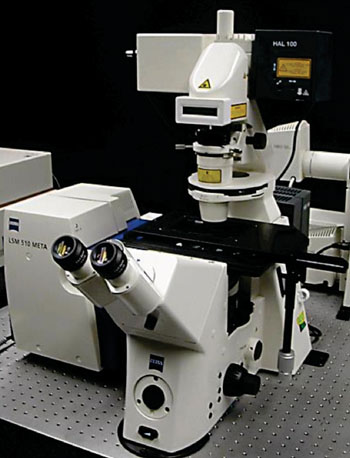
Image: The Zeiss LSM510 laser scan confocal microscope (Photo courtesy of the University of Wisconsin–Madison).
Scientists at the NYU Langone Medical Center (New York, NY, USA), initially used a mouse model to establish the parameters of their study. They then investigated the pathogenic importance of Adaptor protein, phosphotyrosine interaction, PH domain (APPL1) alterations in fibroblasts from individuals with Down syndrome, where elevated βCTF induces Ras-related protein Rab-5 (rab5) activation and diverse endosome anomalies. They also investigated the relevance of APPL1 to neuronal endosome anomalies in late-onset AD. Amyloid precursor protein levels have been found to be normal in human AD brain, but β-secretase activity is reported to be increased, suggesting a higher rate of βCTF generation. Fluorescence recovery after photobleaching (FRAP) was carried out on a LSM510 laser scan confocal microscope (Carl Zeiss AG; Oberkochen, Germany).
The scientists found that, in Alzheimer's and Down syndrome, βCTF forms more rapidly on endosomes triggering a molecular pathway leading to loss of neurons involved with memory. They discovered APPL1, a protein unrelated to amyloid precursor protein (APP) despite its similar acronym, directly links βCTF to a second protein, rab5, known to activate the molecular chain of events leading to neurodegeneration. Lowering APPL1 levels in cells of individuals with Down syndrome abolished the abnormal endocytosis, indicating the vital role of APPL1 in this molecular cascade.
Ralph A. Nixon, MD, PhD, a professor of psychiatry and cell biology and senior author of the study said, “"It will be important to consider the role of βCTF in the design of future therapies for Alzheimer's disease and in the interpretation of current clinical trials of BACE1 inhibitors. BACE1 inhibitor trials have been considered a test of the Aß/amyloid hypothesis but the primary action of these inhibitors is actually to block formation of ßCTF, the precursor of Aß.” The study was published on July 21, 2015, in the journal Molecular Psychiatry.
Related Links:
NYU Langone Medical Center
Carl Zeiss AG




Platinum Member

Automated Coagulation Analyzer
Hemolumi H6
Gold Member

Nucleic Acid Extractor System
NEOS-96 XT

Gold Member

Platelet Function Analyzer
PL-12

Immunofluorescence Analyzer
IFA System