Noninvasive Sequencing Test Approaches Invasive Genome Sequencing for Prenatal Screening
Posted on 15 Jun 2026
Prenatal genetic evaluation guides obstetric care, but standard diagnostics often require invasive procedures that carry risks, stress, and access barriers. Noninvasive prenatal testing (NIPT) has expanded screening but typically targets a limited set of abnormalities and may miss many genetic causes. New findings demonstrate noninvasive fetal sequencing, a genome-wide approach that compares favorably with invasive genome sequencing while improving safety and estimated cost.
At the Broad Institute of Massachusetts Institute of Technology (MIT) and Harvard and the Center for Genomic Medicine at Massachusetts General Hospital, investigators developed noninvasive fetal sequencing (NIFS) to expand genomic assessment in pregnancy. The approach is being presented at the annual conference of the European Society of Human Genetics. NIFS is designed to screen nearly 23,000 genes alongside the conditions already addressed by NIPT.
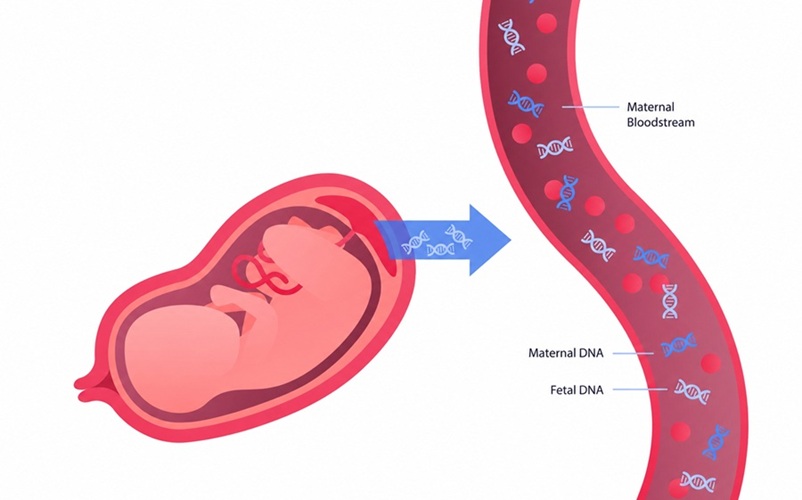
Using deep cell-free fetal DNA (cffDNA) sequencing of maternal blood combined with advanced computational analysis, the method reconstructs fetal variants across the exome. The team evaluated NIFS in 565 pregnancies at an average of 17 weeks’ gestation. Results from NIFS were checked against direct fetal genome sequencing (GS) following amniocentesis or chorionic villus sampling to verify accuracy.
NIFS detected approximately 95%–99% of variants found by invasive GS, depending on variant type and inheritance, and identified 97.2% of variants responsible for clinically important conditions in the study. High concordance persisted even when testing as early as 10 weeks of gestation with fetal fraction as low as 3%. The assessment also noted instances such as twin pregnancies with abnormal tissue and evidence of prior male donor bone marrow transplantation in mothers that can confound standard noninvasive tests.
The investigators estimate that NIFS is considerably less expensive than invasive GS because it leverages capabilities already widespread in commercial diagnostic laboratories and avoids a medical procedure. The technique requires only slightly more sequencing reads than invasive GS and can be applied earlier in pregnancy, potentially enabling more informed management. The researchers plan to enhance detection of additional clinically relevant variants not captured by standard exome sequencing and are expanding and scaling studies.
“The test performed really well in capturing all of the clinically relevant variants found by invasive GS that would have been missed by all current noninvasive tests, and accurately genotyping over 97% of them. There were also some unexpected discoveries, such as twin pregnancies with abnormal tissue, and evidence that some mothers had received a bone marrow transplant from a male donor that confounded NIPT results. This provided further evidence of the strength of the technique,” said Christopher Whelan, senior computational scientist at the Broad Institute of Massachusetts Institute of Technology and Harvard and the Center for Genomic Medicine at Massachusetts General Hospital.
Related Links
Broad Institute
Center for Genomic Medicine at Massachusetts General Hospital