Realistic Mock Samples Aim to Speed Cervical Cancer Test Development
Posted on 14 May 2026
Cervical cancer remains highly preventable, yet screening access is limited in many low- and middle-income settings. Gold-standard tests for high-risk human papillomavirus (HPV) detect viral DNA or messenger RNA (mRNA) using nucleic acid amplification, but they are costly and require specialized equipment. At the same time, test developers often lack reliable, real-world specimens for assay design and validation. Researchers have now developed realistic “mock” cervicovaginal samples to help accelerate more accessible screening tools.
Rice University (Houston, TX, USA) bioengineers created a standardized method to generate contrived cervicovaginal samples that emulate clinical specimens used in HPV screening. The approach provides developers with consistent materials that reflect the complexity encountered in patient care. It is designed to support the design and evaluation of next-generation assays for use in low-resource settings.
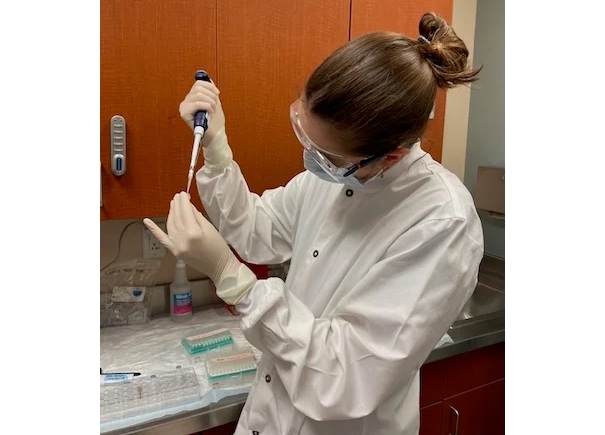
The team first characterized biological variability by analyzing 32 HPV-positive cervicovaginal samples collected from patients in care. Measurements included viral DNA levels and structure, viral mRNA levels, cell counts and composition, and potential inhibitors such as hemoglobin. Findings showed marked diversity: viral DNA spanned up to eight orders of magnitude, mRNA nearly nine orders, and the proportion of viral DNA integrated into human cells ranged from 0% to 100%.
Using these insights, the researchers formulated mock samples by combining HPV-negative background material with HPV-positive cells or DNA, adding mRNA and other components to reflect disease state, and setting controlled levels of inhibitors such as blood. In testing, the mock samples behaved like real clinical specimens when assessed with standard laboratory methods and a commercial HPV test.
The work is positioned to help developers systematically stress-test assays across realistic conditions before clinical trials, with particular relevance for point-of-care (POC) tools that enable “screen-and-treat” workflows in a single visit. The study was published in the Journal of Medical Virology and involved collaborators from Emory University and The University of Texas MD Anderson Cancer Center.
“Cervical cancer is highly preventable with effective screening, but millions of women still lack access to those tools. Our goal is to help researchers build better tests faster by giving them samples that truly reflect what clinicians see in patients,” said Rebecca Richards-Kortum, the Malcolm Gillis University Professor at Rice, co-director of the Rice360 Institute for Global Health Technologies and corresponding author on the study.
“Facilitating the validation and scale-up of technologies that expand access to cervical cancer prevention is essential for global cervical cancer elimination, particularly in low-resource settings where access is urgently needed,” said Dr. Mila Salcedo, assistant professor of Gynecologic Oncology & Reproductive Medicine at MD Anderson and one of the authors of the study.
Related Links
Rice University
The University of Texas MD Anderson Cancer Center