Portable Test Uses CRISPR to Rapidly Identify STIs and Resistance Markers
Posted on 30 Mar 2026
Sexually transmitted infections are increasing, straining clinic capacity and delaying treatment when patients must return for results. Many settings lack rapid on‑site diagnostics, and current workflows often require multiple samples and separate tests. Researchers have now developed a portable gene‑targeting platform designed for rapid, point‑of‑care (POC) identification of common infections. The approach aims to shorten time to diagnosis and enable single‑visit management.
The device is a rapid POC test built on clustered regularly interspaced short palindromic repeats (CRISPR) technology. Developed by researchers at the Peter Doherty Institute for Infection and Immunity (Melbourne, Australia), it is described as the first platform able to detect all major bacterial sexually transmitted infections, including syphilis, on a single system in under an hour. The platform consolidates testing within routine clinic encounters.
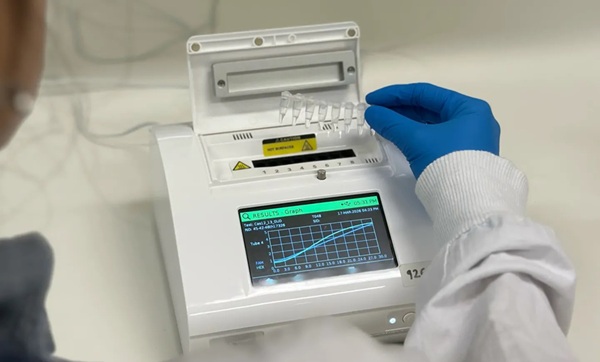
The assay operates in two stages. It first amplifies target genetic material from a urine or genital‑swab specimen at a constant warm temperature using isothermal amplification, avoiding thermal cycling equipment used in polymerase chain reaction (PCR). It then applies a CRISPR‑Cas system in which a programmed guide ribonucleic acid (RNA) directs a Cas enzyme to pathogen DNA or RNA; target recognition activates collateral cleavage of reporter molecules, generating a detectable signal.
The platform can run multiple Cas enzymes and guide RNAs simultaneously, enabling multiplex screening from a single sample. In sexually transmitted infection care, this means clinicians do not need to choose between tests for herpes or syphilis. The instrument reports which infections are present, supporting streamlined evaluation.
Beyond detection, the system interrogates a genetic marker of antibiotic resistance in gonorrhea. This capability can support faster selection of an effective antibiotic rather than empiric prescribing while waiting for conventional results. As resistance to standard gonorrhea treatments increases globally, targeted prescribing information becomes more valuable in everyday practice.
The public‑health need is pressing. In August 2025, Australia’s Chief Medical Officer designated syphilis a Communicable Disease Incident of National Significance, reflecting rising infections. National surveillance indicates infectious syphilis diagnoses have more than doubled over the past decade, with 6,000 cases recorded in 2024. Increasing rates among heterosexuals, including women of reproductive age, heighten risks such as infertility, miscarriages, and congenital syphilis.
The developers note that access to testing is often constrained in rural and remote areas and that multiple‑visit pathways impede timely treatment, even in urban clinics. The portable CRISPR‑based tests are presented as a practical addition to improve detection and management across Australia. The team also envisions future use with self‑collected samples, alongside continued emphasis on clinician education, culturally safe care, and equitable access to services.
Related Links
Doherty Institute